Canada's 'housing bubble' deemed close to bursting


Status
Not open for further replies.
Multitude of reasons for that.

The urban experience in Europe, on average is laughably superior to what we have here today.

A 2 or 3 bedroom apartment that's "child appropriate" costs as much as a suburban SFH anyway, the backyard is "free" in this case.

High rise living is not ideal for families for many reasons.

I grew up in Europe in a walk up, I loved it and had a fantastic childhood.

I don't think that works particularly well here with the exception of a couple areas, West End comes to mind.

The issue we have is that every single SFH zoned area in Vancouver should by now be various forms of 3-4 story walk ups, row homes, mixed use homes, etc.

Our rigid zoning, can't be done attitude, and NIMBYism is killing housing in this country and is by far the number one culprit in the crisis we face.

Great post.

This obsession with saving SFH neighbourhoods is so ironic. By refusing to let the these neighbourhoods change to meet the demand of a growing city, they've created SFH neighbourhoods that no one can afford.

They killed what they were trying to protect.
 
In my city, Laval, they have similar zoning laws. They have what is called, '' maintien des quartiers résidentiels '' basically, you can't change the density in those neighborhoods. What Laval will do and permit is a change in density for areas in proximity to EXO , Métro and REM stations , aka TOD. Most of the residential neighborhoods in Laval are classified as suburban. High-rise towers are not allowed outside of what they consider to be the city center. Despite what people may think, single family home construction in Greater Montreal is in free fall.
 
Bubble indeed

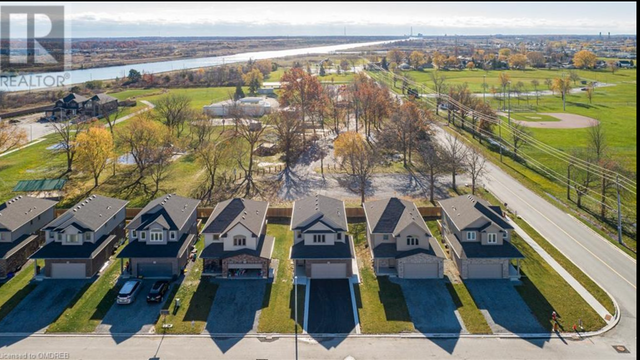
Asking $1.05M... for this...in Welland, ON... on the less desirable "East side" :haha:

1585 sq ft plus finished basement :koko: adjacent to Memorial Park (there used to be a couple of baseball diamonds on this site)

https://www.realtor.ca/real-estate/23840030/21-laurent-avenue-welland

Screenshot-20211125-190944-2.png


Screenshot-20211125-191014-2.png


Screenshot-20211125-191005-2.png


Screenshot-20211125-191037-2.png


Screenshot-20211125-191103-2.png
 
Those are just ludicrous prices. My house with a very similar size was getting offers at $515k this summer. It’s probably bumped up to $550k now cause the basement is completed, but take into consideration this is in what is considered the most desirable and fastest growing area in Winnipeg.

It’s clear this is the liberals strategy to populate the prairies whether by driving existing residents out and influencing more immigrants to choose the prairies with affordability.

:haha: must be nice to still have affordability.
$500k in Niagara now (typically) gets you a 1,000 sq ft bungalow in a less desirable area. The avg house price is $740k, median ~$675k.
 
Multitude of reasons for that.

The urban experience in Europe, on average is laughably superior to what we have here today.

A 2 or 3 bedroom apartment that's "child appropriate" costs as much as a suburban SFH anyway, the backyard is "free" in this case.

High rise living is not ideal for families for many reasons.

I grew up in Europe in a walk up, I loved it and had a fantastic childhood.

I don't think that works particularly well here with the exception of a couple areas, West End comes to mind.

The issue we have is that every single SFH zoned area in Vancouver should by now be various forms of 3-4 story walk ups, row homes, mixed use homes, etc.

Our rigid zoning, can't be done attitude, and NIMBYism is killing housing in this country and is by far the number one culprit in the crisis we face.

I understand all the reasons. Zoning makes it almost impossible to build European-style apartment buildings or row houses. Where it is possible on the slivers of land that are zoned appropriately, developers are incentivized to build high-rises because they make more economic sense.

I also understand that most consumers simply look at what the market has to offer, and buy the existing housing stock that is most appropriate for their lifestyle. But I wish there was more pressure on developers and government to build variety, because we obviously like what other countries built decades or even centuries ago. The American dream is very unsustainable, but it would be nice if all the other options weren't explicitly banned by zoning laws.
 
It’s clear this is the liberals strategy to populate the prairies whether by driving existing residents out and influencing more immigrants to choose the prairies with affordability.

It's clear?

Neither the Liberals nor the Conservatives are interested in attacking affordability because it would make first-time home buyers mad (by raising interest rates and creating stricter lending rules) and alienate the most dependable voting and donating class (older home owners who don't want their wealth to disappear because housing prices fall).

This is not a strategy by the Liberals to turn new sections of the country red; it is a strategy to retain their current supporters.

Thats a shame because younger millenials and gen Z like me would support this move. But because of demographic collapse boomers and gen X , the debt generation, will compose the majority of the population and voter base for the next 40 years at least. So it's very possible the market will be inflated to cater due to policy that panders to debtors and "homeownership as an investment" types for the next 40 years!
 
Real estate is a beast in Canada. No party wants to poke that bear. A collapse could be much worse than the devastating stagflation to parts of Canada caused by Mulroney's trade polices that killed his party.
 
Thats a shame because younger millenials and gen Z like me would support this move. But because of demographic collapse boomers and gen X , the debt generation, will compose the majority of the population and voter base for the next 40 years at least. So it's very possible the market will be inflated to cater due to policy that panders to debtors and "homeownership as an investment" types for the next 40 years!

I think that is the wrong way of looking at it.

The best possible thing for Millenials and Gen Z is to see those in their 50, 60, 70+ to be financial secure in retiring. Those nest eggs will facilitate them leaving the workforce earlier providing more advancement options for the Millenials and Gen Z. That also reduces the cost to government in supporting them in retirement.

Inflation is going to be a factory for the next decade likely. We just need to find a way of ensuring the increase in housing costs slows down and does not go up at the same rate as everything else. Maybe flooding the market with new inventory will do the trick.
 
do you have the data to adjust so that the bottom axis is age? I think that would be an interesting comparison.
I don't think you could do that... as it represents 4 different generations, who would be different ages in that year. You'd have to have their ages on their particular data line instead.

I think they had Slient before 46, Boomer born 46-64, X from 65-80, Millennial from 81-95, if that helps.

What you CAN figure out is that:

A 45 year old early-pack Boomer (in 1991) would have 31% of the market.
A 45 year old early-pack X (in 2009) would have 21% of the market.
A 45 year old early-pack Millennial (in 2016) would have 18% of the market.

So the market slice for later gens is dropping (as we suspected) but the biggest drops were Boomer to X, not X to Millennial.
 
What I take from that is that the Silent Generation is actually the biggest winners % wise. The slow decline makes sense as they die off - Boomers never reached close to their total % ownership of the market.

It looks like that if it weren't for the pandemic, Millennials and Gen X would actually be roughly equal.

I also think it's a function of larger generational brackets for Boomers and Silent (boomers is 18 years of births, Gen X is 15, Millennial 15) - you have to factor in the total number of people in each generation as well, with the baby boom the population of the "boomers" category is likely far larger than that of Gen X and Millennial. Toss longer life expectancies in there as well, slowing generational wealth transfer, and I think the lower %s for Gen X and Millennial makes sense. The 25-34 age group in 1990 (young boomers) was 14.8% for example, while young millennials in that age bracket in 2020 are only 12.5% of the population.

Of course the average age of the US has also increased significantly over that time as well, going from 32.9 in 1990 to 38.4 in 2020, as a result of reduced fertility rates and increased life expectancy.

Of course it's also important to remember that the pie is much larger today than it was in 1990 as well.. even a smaller percent could mean more real estate per capita for millennials and Gen X.
 
Last edited:
I don't think you could do that... as it represents 4 different generations, who would be different ages in that year. You'd have to have their ages on their particular data line instead.

I think they had Slient before 46, Boomer born 46-64, X from 65-80, Millennial from 81-95, if that helps.

What you CAN figure out is that:

A 45 year old early-pack Boomer (in 1991) would have 31% of the market.
A 45 year old early-pack X (in 2009) would have 21% of the market.
A 45 year old early-pack Millennial (in 2016) would have 18% of the market.

So the market slice for later gens is dropping (as we suspected) but the biggest drops were Boomer to X, not X to Millennial.

You mean 2026?
 
Minneapolis and Portland are the latest US cities to ban any form of SFH construction in the entire cities including replacement homes.

This is NOT true in the case of Minneapolis. Minneapolis eliminated SFH-exclusive zoning. There are now no longer any zoning districts in the city that allow only SFH. SFH is still allowed in the vast, vast majority of the city.
 
Status
Not open for further replies.


Back
Top