Downtown Vancouver Updates


Status
Not open for further replies.
Source, please.


I'm not defending our homeless population, merely pointing out its cause and effect. I don't have any solid answers to the growing homelessness issues we face, but I don't pretend I do. Canada is a free country, and with that comes issues tied to those freedoms. If you desire to have Canada run like China, where personal freedoms, movement and speech are repressed or outright illegal then you're in the wrong country. Comparing Canada to China in this regard is pointless.

And Korea has homeless people. A lot, in fact. Go to Seoul Station, and you'll see them passed out all over the steps of the train station, entrance/exit tunnels and on the sidewalks, and it isn't just a couple of people. This isn't a downtown east side situation, but it's a problem that even Seoul faces.

As for drugs, yes, they are a problem, especially for at-risk people, but what is your solution? Punish the users, and fill the prisons? Do you know how much that will cost?

So what are your solutions, Vin? You seem very vocal about it, so you must have thought about some ways to solve these complex issues. Please share.

https://www.vancourier.com/news/van...qc4diENLI5O8TOEan3zFhyS-8jOlPabeTJo8sQfvGniPM
 

Interesting (not very recent) article that shows the homeless count in the City of Vancouver is about the same in 2019 as in 2018, at around 2,200 people (most of them in temporary shelters) despite the City and Province adding 528 units of temporary modular housing.

So we need to see at least 2,200 more temporary modular or permanent $375 a month apartments built, and probably quite a lot more than that as some privately owned SROs Downtown are gentrifying and charging rents far higher than welfare rates, or are closed down because they're unsafe to live in?

I feel that it will never end: no matter how many are built. The problem is the system: the more you build without stiff conditions, the more people will come out in wait for their turn. There is simply no honour in this: expect people to take advantage of the system, especially knowing there are freebies. The current system is a funding black hole.

As for criminals, hardcore repeat offenders need to be removed from the streets with longer jail terms: that would cut down on the competition for people who really need subsidized housing. No money to run the prison system? Make the convicts work for their living: I don't think that is hard to do.
 

That's not a solution.

You were asked for your own solutions and you respond by pointing to someone else pointing out the problems (which we already know and are discussing) and the attempted solutions and what's working and what's not.
And all without commentary or opinion on your own part.

That's THEIR thoughts, not yours.
They're not even proposing any solutions any more than just saying that this is what the state of things are.

So to re-iterate giallo's question, what are your solutions?

And just a minor point on this notion that cracking down in things like substance-abuse will in some way help resolve this issue in any major way or otherwise, there is this from your own link and article:-

>>>"Asked about addictions, 31 per cent of 1,156 (homeless) surveyed said they had no addiction, 38 per cent said they had an addiction to cigarettes and 33 per cent an addiction to opioids.

Another 29 per cent had an addiction to methamphetamines, 22 per cent to alcohol, 21 per cent to marijuana and 14 per cent to cocaine."


Which is just about in line what substance abuse numbers of the general population (homeless or not).

And the idea that this would be a major way of dealing with the problem assumes many points, none of which stack up to reality, such as the notion that these people end up homeless because they are substance abusers or because of substance abuse (which of course ignores the reality that a lot of people who end up homeless actually turn to substance abuse - AFTER THE FACT - as a way of helping them deal with their new reality, and because in some cases it's "cheaper" for them, in dealing with the real issues they face than the avenues that you or I may have available to us),.....
.....or that it's not possible to have a functioning and functional lifestyle (own a home, have a family, job, etc) and STILL be a functional drug-addict or substance abuser - which is clearly nonsense since there are a lot of functional substance abusers in society who only happen not to be a problem you face directly or who blight your city directly (or your perception of it).

Or just simply ignoring (as is shown in the article itself) that for some homeless, substance abuse is simply not a part of the equation as they are not substance abusers themselves and thus cracking down on this problem doesn't to jack for them in solving their own homeless problem.

I think the biggest part of the article you posted (and which in my opinion you seem to ignore, as do others) is the one that comes right at the end
(bolded for emphasis by myself):-

>>>"Drivers of homelessness were consistent with previous findings of Vancouver counts:

A low vacancy rate, the loss of single-room-occupancy hotel units such as the closure of the Balmoral and Regent hotels, high rents at some of the hotels, overall rising rental rates, substance abuse issues, young people aging out of foster care, traumatic life events and chronic poverty."


These are problems and drivers that the city and indeed the political class has only recently began acknowledging and trying to tackle actively through policy.
 
This is already more or less our policy, people just don't see it. There are plenty of people that are temporarily homeless but a helping hand pulls them out. There are also plenty of people in long term mental health care, Riverview is set to reopen next year.

The problem is the inbetweeners, as it usually is for a lot of social issues. We can't institutionalize all people with minor behavioural issues, or anger issues, or intelligence issues, or what have you. We've ruled that under our constitution you can't hold someone who is of sound mind against their will. It seems like addiction issues fall under this umbrella. On the other hand, some people simply choose to remain homeless.

It may be an issue you just have to deal with and accept in a major regional city. Even the Soviet Union had homelessness, so if the USSR which was famous for building cities of monolithic apartment flats couldn't house everyone, how can we expect to?

Generally agree, but there are some cases that should not be controversial.

For example, there has been a number of articles over the last couple of years where an individual has been arrested literally 20+, and in one instance I remember 40+ times for a same/similar crime.

Without recalling, I imagine addiction is the real underlying issues, but my point is that its logical that at some point you forfeit your right freedom based on your criminal history. Mandatory detox and medically supervised incarceration is the only reasonable solution. These people need legitimate help, counselling, and a reorganizing of their priorities.

I fully realize the cost in this, its large, but would benefit society more, and certainly the individual.
 
Source, please.


I'm not defending our homeless population, merely pointing out its cause and effect. I don't have any solid answers to the growing homelessness issues we face, but I don't pretend I do. Canada is a free country, and with that comes issues tied to those freedoms. If you desire to have Canada run like China, where personal freedoms, movement and speech are repressed or outright illegal then you're in the wrong country. Comparing Canada to China in this regard is pointless.

And Korea has homeless people. A lot, in fact. Go to Seoul Station, and you'll see them passed out all over the steps of the train station, entrance/exit tunnels and on the sidewalks, and it isn't just a couple of people. This isn't a downtown east side situation, but it's a problem that even Seoul faces.

As for drugs, yes, they are a problem, especially for at-risk people, but what is your solution? Punish the users, and fill the prisons? Do you know how much that will cost?

So what are your solutions, Vin? You seem very vocal about it, so you must have thought about some ways to solve these complex issues. Please share.

I think to start, we need to acknowledge the issue is not binary. There is miles and miles of grey between China and Canada, so far as ideology goes.

Its a false paradigm to say that lets be China and throw them in prison to die, or lets be Canada and its all freedom let everyone rot on the street.

Nuances.

We need a middle of the road solution based on some reasonable red lines.
Things broader society can agree on.

For instance;

If an individual has a documented multi decade history of addiction, and petty crime to go along with it, that could be used as a reason to medically incarcerate with supervised care, in what some cases would likely be a permanent basis.

If an individual has been properly diagnosed with a know mental disorder that will prevent them from being able to take care of themselves, that can be used as a reason for medically supervised care.

With even just those two red lines from above, I would be curious to know what percentage of people would be removed off the street and into more appropriate care. The systems in place can then focus on those that are newly homeless, or struggling, and beyond hope. Its nothing short of a tragedy to let someone hit bottom and scrape along there for the remainder of their life, or until they die.

I would love to know what percentage of posters finds this too extreme a solution.
 
Rofina, totally agree with you.

That's not a solution.

You were asked for your own solutions and you respond by pointing to someone else pointing out the problems (which we already know and are discussing) and the attempted solutions and what's working and what's not.
And all without commentary or opinion on your own part.

That's THEIR thoughts, not yours.
They're not even proposing any solutions any more than just saying that this is what the state of things are.

So to re-iterate giallo's question, what are your solutions?

And just a minor point on this notion that cracking down in things like substance-abuse will in some way help resolve this issue in any major way or otherwise, there is this from your own link and article:-


Which is just about in line what substance abuse numbers of the general population (homeless or not).

And the idea that this would be a major way of dealing with the problem assumes many points, none of which stack up to reality, such as the notion that these people end up homeless because they are substance abusers or because of substance abuse (which of course ignores the reality that a lot of people who end up homeless actually turn to substance abuse - AFTER THE FACT - as a way of helping them deal with their new reality, and because in some cases it's "cheaper" for them, in dealing with the real issues they face than the avenues that you or I may have available to us),.....
.....or that it's not possible to have a functioning and functional lifestyle (own a home, have a family, job, etc) and STILL be a functional drug-addict or substance abuser - which is clearly nonsense since there are a lot of functional substance abusers in society who only happen not to be a problem you face directly or who blight your city directly (or your perception of it).

Or just simply ignoring (as is shown in the article itself) that for some homeless, substance abuse is simply not a part of the equation as they are not substance abusers themselves and thus cracking down on this problem doesn't to jack for them in solving their own homeless problem.

I think the biggest part of the article you posted (and which in my opinion you seem to ignore, as do others) is the one that comes right at the end
(bolded for emphasis by myself):-

These are problems and drivers that the city and indeed the political class has only recently began acknowledging and trying to tackle actively through policy.

I never said the article I posted is a solution, where did you get that from? :koko: My article is to show giallo's question of where most of the homeless people are from, but that doesn't mean I must agree with all comments shown in the article.

I already mentioned steps the City and Province can take to improve the situation: you're clearly not listening.

Not all homeless people are substance abusers, but if we crack down on drugs, we are dealing with 53% of them. That's a huge percentage. Many of the downtown and urban crimes are also committed by either drug users or drug criminals. Targetting these people will make local residents sleep better. Why are you trying to defend criminals?
 
I think to start, we need to acknowledge the issue is not binary. There is miles and miles of grey between China and Canada, so far as ideology goes.

Its a false paradigm to say that lets be China and throw them in prison to die, or lets be Canada and its all freedom let everyone rot on the street.

Nuances.

We need a middle of the road solution based on some reasonable red lines.
Things broader society can agree on.

For instance;

If an individual has a documented multi decade history of addiction, and petty crime to go along with it, that could be used as a reason to medically incarcerate with supervised care, in what some cases would likely be a permanent basis.

If an individual has been properly diagnosed with a know mental disorder that will prevent them from being able to take care of themselves, that can be used as a reason for medically supervised care.

With even just those two red lines from above, I would be curious to know what percentage of people would be removed off the street and into more appropriate care. The systems in place can then focus on those that are newly homeless, or struggling, and beyond hope. Its nothing short of a tragedy to let someone hit bottom and scrape along there for the remainder of their life, or until they die.

I would love to know what percentage of posters finds this too extreme a solution.

It's sensible and a whole lot more nuanced than the Thomas Wayne approach some are advocating, so yes, let's make it happen.
 
Generally agree, but there are some cases that should not be controversial.

For example, there has been a number of articles over the last couple of years where an individual has been arrested literally 20+, and in one instance I remember 40+ times for a same/similar crime.

Without recalling, I imagine addiction is the real underlying issues, but my point is that its logical that at some point you forfeit your right freedom based on your criminal history. Mandatory detox and medically supervised incarceration is the only reasonable solution. These people need legitimate help, counselling, and a reorganizing of their priorities.

I fully realize the cost in this, its large, but would benefit society more, and certainly the individual.

I think its quite criminal and horrible that those in power let people live that way and offer absolutely no help to them but just keep letting them go. How can they let people live a life like that and enable them. Crazy.
 
sorry to keep it off topic but this is interesting and whacked. We have the same types of do-gooders and agencies working in the DTES. Seattle where I was this weekend does have a pretty visible homeless population, but I didn't come across any areas as bad as the DTES.

Fourteen years ago, King County pledged to end homelessness within a decade. Instead the problem has grown exponentially, catapulting Seattle to one of the worst per capita rates of homelessness in the US. While the Seattle City Council blame the problem on corporate giants like Amazon, homelessness has been growing and enabled by their continued funding of non-performing agencies that are supposed to assist people in transitioning to permanent housing.

One of these non-performing agencies is the Seattle Housing and Resource Effort (SHARE). According to their website, SHARE runs 14 indoor shelters around Seattle, for which it annually receives several hundred thousand dollars from Seattle’s Human Services Department. Most of these shelters are owned by churches. Besides the shelters, SHARE operates a network of homeless camps known as “tent cities.” The group says that “up to 450 people each night find safety, shelter, dignity, and respect” in its “self-managed” shelters and camps, but it has never provided any documentation for that figure.


David Preston, a citizen journalist with the neighborhood group Safe Seattle, did an investigation of SHARE’s finances and practices in 2016. He discovered that “The group resists attempts to monitor its numbers or performance as an ‘invasion of privacy.’” The group has even gone so far as to use a fraudulent, unlicensed accountant for years.

SHARE views homelessness as a valid lifestyle—a lifestyle of choice—and while it does get a number of people off the street temporarily, it makes no claim of getting them into jobs, permanent housing, or addiction treatment programs. “We are not a social service organization,” they declare. “We are a self-help group.” Preston discovered during his investigation, “If you visit a SHARE tent camp or shelter you will meet people who have been homeless for years. As a rule, these people do not have caseworkers, and many/most have no definite plan for transitioning into an apartment. When they leave one tent camp or shelter, they simply find another. Or they go back to the streets. Or they move to another state.”

Since Preston’s investigation in 2016, SHARE’s failures have become more visible. One of SHARE’s most public failures was the Licton Springs Tiny Home Village in North Seattle. This village opened in 2017 and used what is called the “low barrier” to entrance model. This means that residents can enter without identification and continue using drugs and alcohol. It also means criminals with outstanding warrants, drug addicts and alcoholics can continue their behavior in shelter services provided by the city with no expectation for treatment or prosecution.

Also discovered by Preston’s research, “SHARE shelter residents get ‘participation credits’ for attending political demonstrations and rallies. Each resident must earn a number of these credits each week. Otherwise, they face immediate eviction.

https://www.thepostmillennial.com/how-seattle-policy-has-encouraged-more-homelessness-and-crime/
 
Last edited:
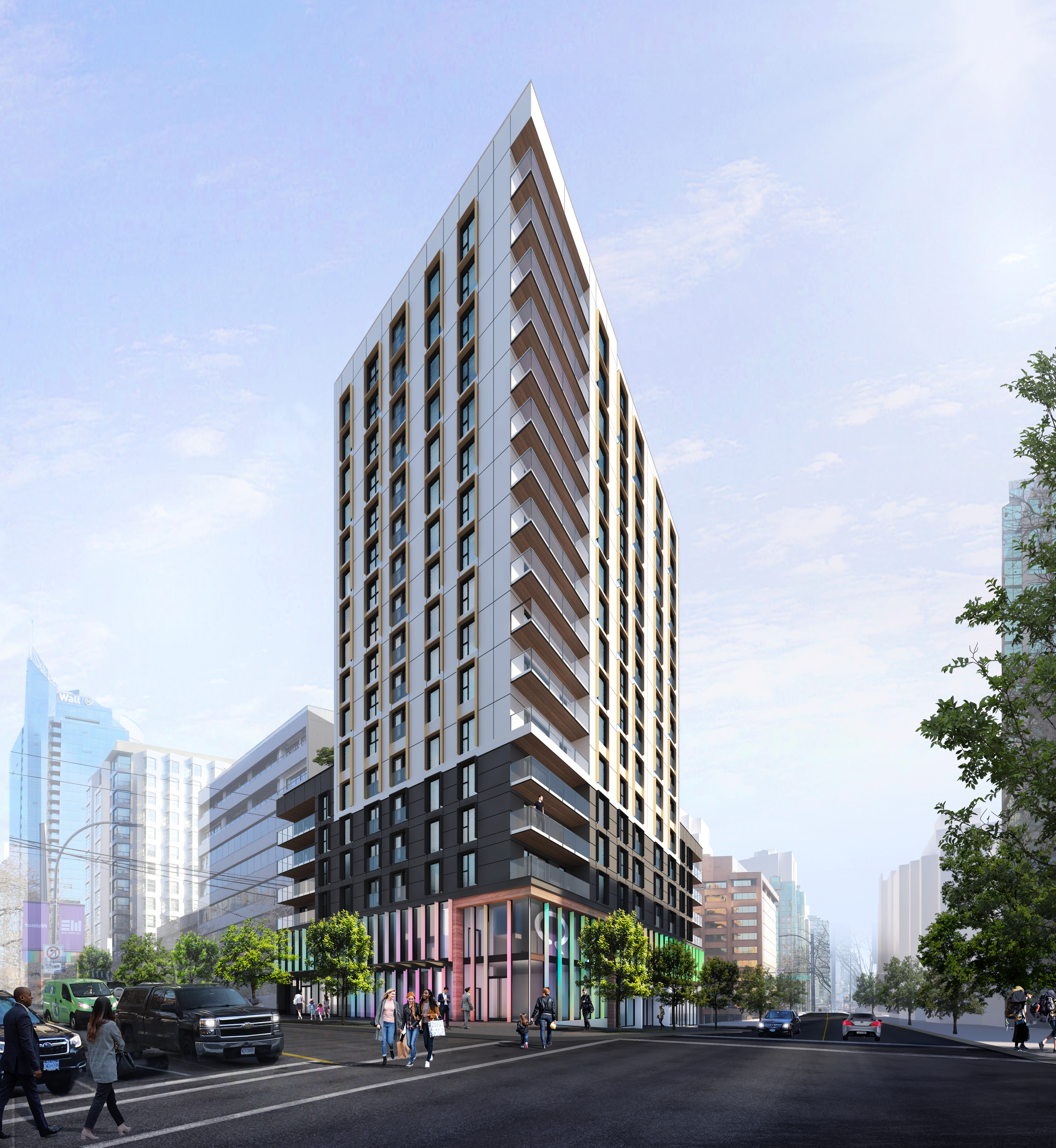
Didn't see this but social housing for Burrard/Davie. 17 storey social housing.

Render-2.jpg


https://rezoning.vancouver.ca/applications/1190burrardst/index.htm
 
Status
Not open for further replies.


Back
Top