• City-versus-city activity is flat-out banned from being posted here in all its forms.

    City vs city trolling sets up a rather nasty and personal fight between forumers from one place and forumers from another place, potentially affecting hundreds of members any time it breaks out. Nothing good comes of versus-trolling, but long after the insults and mockery have been removed, bad feelings between individuals and between groups tend to linger, oftentimes popping up in unrelated threads for months afterwards.

    Thus, when it comes to 'versus' trolling, a line must be drawn--sharply. Anyone who crosses that line shall be disciplined, up to and including suspension and even summary banishment without warning. Forum moderation and administration shall be the arbiter of what constitutes versus-trolling, so if you think your post might be perceived as an unfair attack on an entire city that will upset residents there, tread lightly or reconsider how you intend to express your opinion. No forumer shall successfully claim ignorance of our policy against versus trolling, and no forumer should believe he can get away with it.

    The ban on versus activity applies to all posts and all threads, even ones that are not initially set up as city-versus-city.

    If you see any troublesome posts please report them using the "report a post" icon -
    report.gif
    in the upper right corner of every post on the forum.

Where Is The Rust Belt?


Disagree. Take a streetview tour around the innercity neighbourhoods of Toronto and Buffalo, they look nothing alike. Toronto is mainly brick with lots of attached housing, Buffalo is mainly woodframe and all detached housing. Toronto is a lot more dense and packed in with narrower streets. Toronto also has lots of long, intact commercial strips which are actually very similar in appearance and in the mix of businesses to the commercial strips throughout the outer boroughs of NYC. Toronto also has an enormous amount of apartment buildings much like NYC.

Outside of appearance, Toronto is obviously the biggest city with the biggest skyline and main immigration, financial, and media centre of an entire country... much like NYC, only smaller.

Absurd in any case, but definitely not in terms of its role and image within Canada. Toronto's "bigger" in Canada than New York is in the States.

Yeah, we all know that Toronto is the "capital city" of Canada and can tout all the superlatives that come with that designation. And I'm personally quite familiar with the city, so I don't need to "go visit and educate myself" :) I grew up only about 100 miles away from Toronto as the crow flies, and have been visiting since 1979 (when I first went with my dad to see the Leafs play the Canadiens... don't remember too much since I was only 5, but I do remember Guy Lafleur playing since he was my favorite player :haha:), and last spent a week there for a conference/some vacation time this past June. Anyway, I think its an awesome city. But that doesn't mean it feels like NYC to me (and NYC is a city in which I've lived and visit frequently). My comment was in no way a slight to Toronto... I don't think it feels like Buffalo either.

But, to me, Toronto feels like what Buffalo might be if Buffalo grew to be 10x larger than it is.

Hypothetical, yes, but based on geography (Great Lakes location, terrain, proximity, etc.), age, history, economies, and urban development up until mid-century... Toronto and Buffalo were remarkably similar, and that historically-similar vibe/atmosphere/whatever you want to call it still exists for me. That's why I say Toronto is more like a big version of Buffalo than it is like a small version of New York. The two cities just went in different directions since the 1950s obviously (though we should all remember what downtown Toronto looked like in the 80s and 90s).

New York just has had a much larger and different historical size, scale, national and global prominence, economy, culture, etc. and a very different location, setting, and density... which all combine to give off a very different vibe to me.

Toronto certainly feels like a very big city to me. Buffalo does not. And neither feels like New York to me.

And it's not that nowhere feels like New York to me... Philadelphia does, on a much smaller scale, Boston does too. Toronto is now bigger and more prominent than both, but that doesn't mean it now feels more like New York.
 
Even when they were similar sized in the first half of the 20th century, I don't think Toronto and Buffalo were that much alike. Buffalo was much more of a city of heavy industry, Toronto was commercial/light industry.
 
Toronto feels like a Sunbelt city but with Northeast Corridor development patterns, if that makes sense. A bit like DC, but DC is greener and grander; Toronto is kinda messy. Also a bit of British Isles feel in the core neighborhoods.

Doesn't really look or feel like NYC or Buffalo.
 
Toronto feels like a Sunbelt city but with Northeast Corridor development patterns, if that makes sense. A bit like DC, but DC is greener and grander; Toronto is kinda messy. Also a bit of British Isles feel in the core neighborhoods.

Doesn't really look or feel like NYC or Buffalo.

DC is a great analogy in terms of growth trajectory. Similar size metros today. Both were "top 15" NA cities in 1940 at around 900,000 and have sizable prewar cores, and both areas grew rapidly post-WWII and have a lot of post-1980 suburbia.
 
Nearly choked on my coffee! May as well say Pittsburgh is just a smaller LA, or Larger Youngstown .See how stupid, ignorant, and off the mark that sounds?
Just go visit, and educate yourself..Visit both on the same weekend.As much as Toronto isn't a smaller New York, it isn't a larger Buffalo either..It's it's own thing. And no disrespect to Buffalo..I know Buffalo people would agree.

Well, I didn't mean to make you choke on your coffee :)

I don't think the Pittsburgh-LA comparison could ever make any sense. That's totally inappropriate as a comparison in pretty much every way to the Buffalo-Toronto example.

The Youngstown-Pittsburgh actually has a lot of validity.

Out of U.S. cities, Toronto reminds me most strongly of Chicago, though the built vernacular is a bit different.

Yup... a Great Lakes metropolis... and what Buffalo might look and feel like had it grown to the that level.

I mean if you're talking about how Buffalo and Toronto developed it's not too far off. Like Toronto's urban growth history probably more closely matches Buffalo. Both Great Lake towns with an early manufacturing presence that has since fallen away. The cities probably wouldn't have felt all that different just before WW2. No city developed in the way New York did and that's why it's New York.

If you're comparing how the cities operate within their respective countries today than it would be hard for them to be more different.

Yes, thank you for the reasoned thinking.

I'm not surface level... when I'm in a big city, I don't "feel like I'm in New York" like some people do. :haha:

Toronto and Buffalo were pretty much the same size in the early 1950s.

And Toronto has much more recently come to the level of international prominence it boasts today. I fully agree that Toronto and Buffalo are NOTHING like each other when it comes to the position the hold within their countries, the level of cosmopolitanism, etc. But if Buffalo actually were the Toronto of the US, it would probably look and feel a hell of a lot like Toronto does now. And the reverse holds as well. They're what, 40 straight line miles away from each other?
 
Even when they were similar sized in the first half of the 20th century, I don't think Toronto and Buffalo were that much alike. Buffalo was much more of a city of heavy industry, Toronto was commercial/light industry.

That's completely false. Toronto was a major location of heavy industry. Toronto became more diversified and prominent than Buffalo, but Toronto was the heavy manufacturing center (foundries, mills, factories, and later automobile plants) and the major rail and shipping center for all of industrial Ontario.

Steel mills, iron foundries, machinery, engine, tool, and vehicle factories, oil refining, grain milling, livestock yards and processing, coke, iron ore and coal shipping and docks, large-scale brewing and distilling... these do not fall in the category of "light industry".

Toronto did all of the stuff Great Lakes industrial cities did... but becoming the center of so much more for Canada allowed it become what it is today. I think it's THE prime example of rustbelt success.


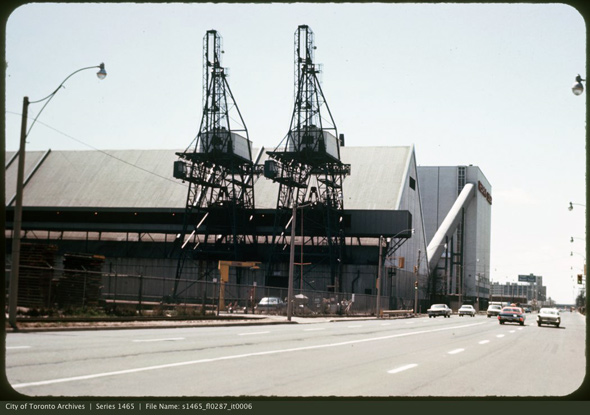
Some of Toronto's "light industry" ;) You could say these photos are historic photos of Buffalo or Erie or Cleveland or Toledo or Detroit, etc. and no one would be able to tell the difference.

2012330-leaside-aerial-1920-f1244_it7296.jpg


201214-to-bay-1920-f1244_it0444b.jpg


2012330-royal-york-heating-plant-f1231_it2009.jpg


20111114-coal-oil-refineries-port-lands-1930-f1244_it1440%20%281%29.jpg


2012330-maple-leaf-milling-1916-f1244_it2550.jpg


2012330-shipyards-1918-f1244_it1571.jpg


2012330-lansdowne-royce-1932-s0071_it9177.jpg


2012316-redpath-1970s-s1465_fl0287_it0006.jpg
 
Last edited:
Well, I didn't mean to make you choke on your coffee :)

I don't think the Pittsburgh-LA comparison could ever make any sense. That's totally inappropriate as a comparison in pretty much every way to the Buffalo-Toronto example.

Okay, I read some of your later posts explaining your rationale of both cities having similar MO's in the early 1950's, so yes I agree.They probably were similar in a lot of ways 70years ago..As it stands now though, Toronto is not simply just a bigger version of Buffalo, and is as Mars and Venus to each other as LA is to Pittsburgh..I stand by that. You then went on to state how Buffalo would of pretty much became like Toronto had it grown to 10x it's current size..Even if Buffalo had grown at the same clip instead of stagnating, it's hard to tell what Buffalo would of looked like had it grown to Toronto's size..Would it have a financial district, media headquarters?..Hard to say really..You can almost make a similar comparison to St. Louis and Chicago..Wasn't St. Louis the IT city in the early 20th century..World's fair, all that?.Is Chicago just a bigger version of St. Louis?..Oh, and yes to rust belt success story..Toronto had it in the cards..It was destined to be what it became. I certainly don't get the "oh this is a once was manufacturing city", when I'm walking around Toronto's core, even though it was.
 
Last edited:
Okay, I read some of your later posts explaining your rationale of both cities having similar MO's in the early 1950's, so yes I agree..They probably were similar in a lot of ways 70 years ago..As it stands now though, Toronto is not simply just a bigger version of Buffalo, and is as Mars and Venus to each other as LA is to Pittsburgh..I stand by that..Even if Buffalo had grown at the same clip instead of stagnating, it's hard to tell what Buffalo would of looked like had it grown to Toronto's size..Would it have a financial district, media headquarters?..Hard to say really..You can almost make a similar comparison to St. Louis and Chicago..Wasn't St. Louis the IT city in the early 20th century..World's fair, all that?.Is Chicago just a bigger version of St. Louis?

I don't think Toronto is simply just a bigger version of Buffalo -- I never claimed that. I said that "Toronto is more like a big version of Buffalo than it is like a small version of New York". I fully stand by that.

Both cities were VERY similar and in similar overall shape thru the 1950s. That's not all that long ago when one considers the full course of a city's development.

LA and Pittsburgh are completely different cities in every possible way. They've have never had anything in common at the macro level... and they're over 2000 miles away from each other. I mean, come on.

I'm not familiar enough with the cities in the Chicago-St. Louis example, so I can't really comment on that.

Toronto and Buffalo are a great example of two very similar cities (who exist 60 miles away from each other) which went in far different directions to wind up being very different.

This is all hypothetical, of course. But, in the study of urban geography and development in the region, it's hard to look at two cities which had similar industries, locations, and built environments... and which are only separated by 60 miles (and an international border obviously)... and not take note of their vastly different trajectories at a certain point and wonder what could've been for Buffalo. I'm not suggesting that Buffalo would become exactly what Toronto is, so many internal and external factors involved, but one cannot deny that the two cities had generally the same skeleton at a point not all that long ago. Toronto still has those same Great Lakes Industrial bones, it just kept building stronger and more sophisticated muscles on top of them :)
 
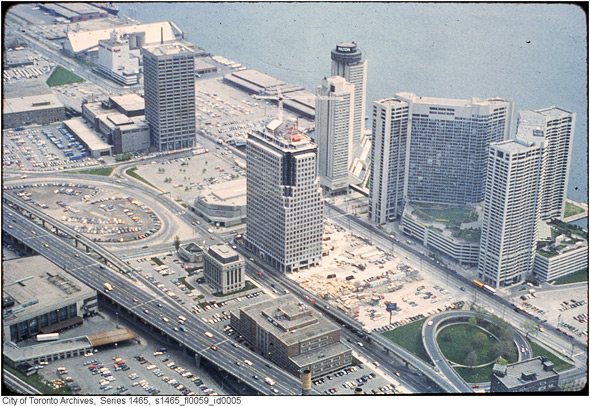
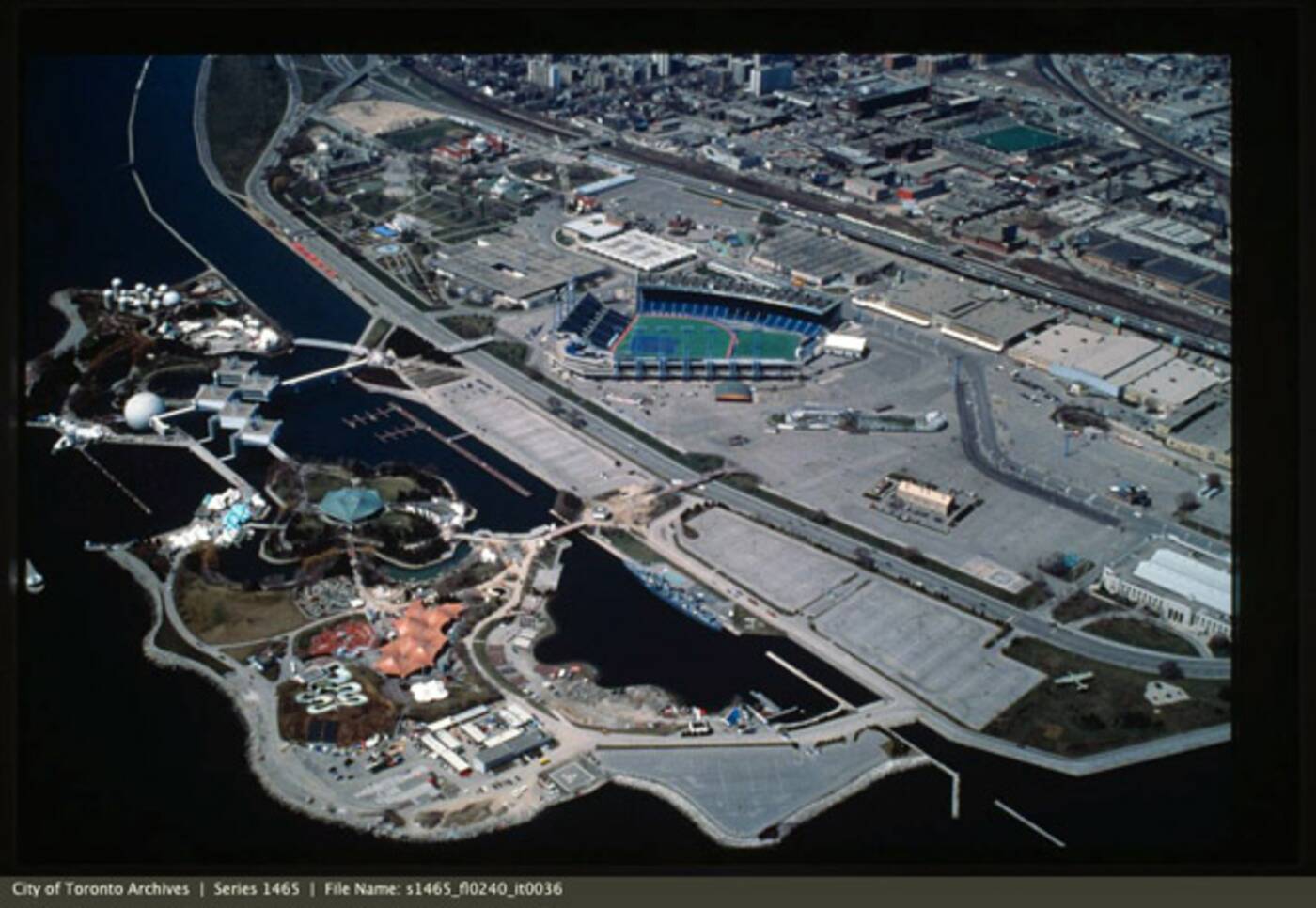
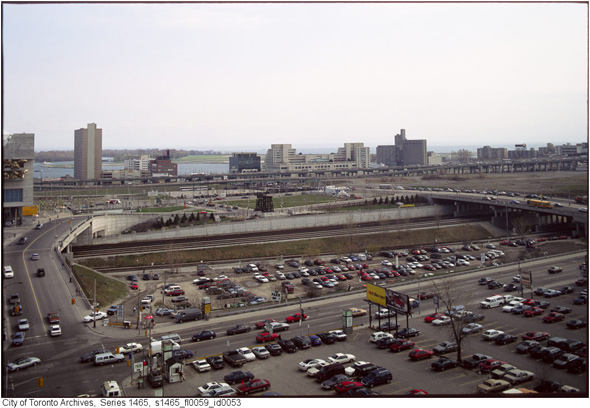
And it's informative to remember that in the 1980s and even into 1990s, downtown post-industrial Toronto was so much different than today. Since I'm in my 40s, I can remember the "massive parking lot" era quite well...

20111011-Toronto-parking-lots-history.jpg


2011727-PC-hc-waterfront-s1465_fl0059_id0005.jpg


2011915-Ex-grounds-aerial-1980s-s.jpg


20111011-parking-lot-90s-front-spadina-s1465_fl0059_id0053.jpg
 
You can almost make a similar comparison to St. Louis and Chicago..Wasn't St. Louis the IT city in the early 20th century..World's fair, all that?
chicago actually surpassed st. louis in population by 1880 on paper, and by 1870 in reality (st. louis fudged their numbers on the 1870 census in a vain attempt to "stay ahead" of chicago).

so no, in the early 20th century, st. louis was no longer the IT city of the midwest. that role was firmly in chicago's hands by then, as it has been ever since.


Is Chicago just a bigger version of St. Louis?
chicago is a just a bigger version of milwaukee.

both cities germinated from the same seeds, but chicago got hyper-fertilized by the railroads in the latter half of the 19th century.

there's an alternate universe out there somewhere where the civil war didn't happen and st. louis became the alpha city of the interior, with all of the railroads, leaving chicago to develop as a more modest milwaukee or cleveland-sized great lakes city.
 
Last edited:
No, there isn't. There are no "Capitols" in Canada.

Sure there are. Here's Ottawa's Capitol:

OT-photo_gallery_collections-Tourists_Sites-Parliament.jpg


For your info: capital is the most important city in an area, region, country, etc., and generally refers to a governmental seat. Capitol is building where legislators meet and have session.

Toronto is the capital. Ottawa is/has the Capitol.

And this is the United States' House of Commons, right? That's the right term for this - the House of Commons of the United States?

https://www.google.ca/search?hl=fr&...hUKEwiV7O6asbvnAhXBmeAKHcZNA1sQ4dUDCAU&uact=5
 
Sure there are. Here's Ottawa's Capitol:

OT-photo_gallery_collections-Tourists_Sites-Parliament.jpg


For your info: capital is the most important city in an area, region, country, etc., and generally refers to a governmental seat. Capitol is building where legislators meet and have session.

Toronto is the capital. Ottawa is/has the Capitol.

That's not a Capitol. It's the Parliament of Canada.

The word "Capitol" has no meaning in Canada as a legislative building or assembly. And no meaning outside of the USA in fact except for a few other instances like Imperial Rome.

Ottawa is the national/federal capital of Canada.

Toronto is the provincial capital of Ontario.

New York City is officially and semantically (strictly speaking) the capital of nothing, though figuratively it can said to be the capital of many things (finance, musical theatre, etc.).
 
And this is the United States' House of Commons, right? That's the right term for this - the House of Commons of the United States?

No, silly. The House of Representatives... it's part of the US Congress. They meet in the US Capitol in the capital, Washington DC, just like Canadian Congress meets in the Canadian Capitol, but not in the Candian capital (which is Toronto).

That's not a Capitol. It's the Parliament of Canada.

The word "Capitol" has no meaning in Canada as a legislative building or assembly. And no meaning outside of the USA in fact except for a few other instances like Imperial Rome.

Ottawa is the national/federal capital of Canada.

Toronto is the provincial capital of Ontario.

New York City is officially and semantically (strictly speaking) the capital of nothing, though figuratively it can said to be the capital of many things (finance, musical theatre, etc.).

So you're telling me that Parliament meets at the Capitol in Ottawa?

Does the Queen live there too?


Back
Top