Winnipeg | Historical discussion


Thanks I appreciate that Rob.

I didn't even know the house existed till I went looking for a place to park on Sunday night.

It's too bad about the home's current condition.

On the topic of buildings in bad condition, I was in Walker recently. Boy, that place is a lot more run down than I remembered.

Paint peeling, burnt out light bulbs, torn carpet from 1920 something. I know its a non-profit theatre, but it was kind of disheartening to see.
you did no know it existed its been in my bike ride "threw" winnipeg threads at least twice
 
Owner won't demolish Village church

Updated: March 18, 2008 at 08:59 AM CDT

* Print Article
* E-mail Article

A 98-year-old former church in Osborne Village, slated for demolition by its owner, will live on.

The owner of the First Church of Christ Scientist at the corner of River Avenue and Nassau Street North has withdrawn his application to the city to demolish the building, according to an e-mail circulated on Monday by the area’s councillor.

The news is seen as a victory for preservationists of the city’s heritage architecture.

“As chair of the Historic Buildings Committee, I have officially notified the Property and Development (department) that the demolition request has been withdrawn and that the matter can be filed,” said Fort Rouge- East Fort Garry Coun. Jenny Gerbasi, in the e-mail.

Gerbasi had helped drum up public interest in a city hall committee meeting March 25 to deal with the church. Gerbasi’s committee had recommended last month that the city move to protect the building.

The First Church of Christ Scientist had been on the city’s inventory of historical buildings, awaiting evaluation as a site to be protected from demolition late last year when the property’s owner, businessman Ben Haber, applied to destroy the structure.

Haber furnished documents showing the building, used until five years ago by followers of the Church of Christ Scientist, was riddled with mold and could not be converted to apartments, as Haber had originally intended.

Gerbasi credited public opposition to the church’s owner’s plans as pivotal in saving the building.
 

source http://winnipegtimemachine.blogspot.com/

THOMAS RUSS DEACON

He became Mayor to see the Aqueduct Built


by George Siamandas
​

Thomas Russ Deacon became Mayor of Winnipeg in order to ensure the aqueduct was built. Thomas Russ Deacon was born in Perth Ontario on January 3, 1865. He started work at age 11 at a country store and by age 12 Deacon was working in logging camps were he rose to foreman by age 20. Deacon realized the value of education and returned to school earning first his high school diploma and in 1891 a degree in civil engineering from the University of Toronto. His first job was as superintendent for the construction of the North Bay Ontario waterworks.

MINING ENGINEER
In 1892 he took a job in Kenora (previously known as Rat Portage) to work as a manager of the Ontario Gold Commission. Deacon stayed in Kenora a decade and served as an alderman and acting mayor. As the century turned Deacon was now working for the Mikado Gold Mine. He must have had limited success at finding gold because he got the nickname "Chief No Gold." Deacon left Ontario in 1902 and came to Winnipeg. Deacon went into partnership with HB Lyall in the founding of the Manitoba Bridge and Iron Works.

AN ADVOCATE FOR GOOD WATER
Deacon became an advocate of Shoal Lake in 1902. It was during his stint in the Lake of the Woods area that he became familiar with the Shoal lake region. In 1906 Deacon was appointed to the Water Supply Commission and soon let his preferences for the long term benefits of the Shoal Lake source be known.

For the next decade the issue was debated for years with most Winnipeg politicians preferring the less costly options of using the Winnipeg River. Only one man showed vision and was able to see through this political fog of uncertainty. It was Councillor Thomas Russ Deacon who argued strongly in favour of Shoal Lake. Despite the cost! He knew the water was of high quality, it was abundant, and its higher elevation meant it could flow simply and elegantly to Winnipeg by gravity alone. Winnipeg the city with a future deserved Shoal Lake over other proposals like the Winnipeg River.

MAYOR DEACON
The pivotal election was in 1912. Deacon was persuaded to run against Alderman JG Garvey at the last moment. The Telegram had supported Garvey on the basis of his 16 years of civic service. But Deacon knew that Garvey was against the Shoal Lake plan. Deacon felt it was Winnipeg's destiny to become a great city and the matter of high initial cost would be taken care of by future growth. If he believed in the aqueduct he had to become mayor. Deacon ran a series of newspaper ads each bearing a new message. Deacon was not just for good and abundant water, he was also for a larger civic health department, better civic staff, support to the Winnipeg General Hospital and workers compensation. His slogan became Winnipeg demands progress. Deacon's second mayoralty election was fought in the fall of 1913. In October of 1913 they voted in favour of the Shoal Lake Aqueduct expenditure of $13.5 million.

Deacon's leadership was well received, and at the same fall vote, Thomas Russ Deacon was re-elected mayor of Winnipeg. It was the culmination of a ten year effort of Deacon as a prominent citizen to see the Aqueduct built.

MANITOBA BRIDGE & IRON WORKS
Manitoba Bridge merged with Domminion Bridge in 1930 and became Canada's largest stocker of steel in Canada. Structural steel was fabricated and used in railway and highway bridges, buildings of all kinds, as well as hydro transmission poles and towers. The company had locations all across Canada.

Thomas Deacon died May 30 1955 at age 90 at 144 Yale Ave and is buried at St James Cemetery. Deacon had three sons and one daughter. Winnipeg's main water reservoir located east of the city is named in his honour.
 
I was quite happy when I heard the great news.

I hope gas station theatre would consider moving in their and how about partner up with a condo developer who could build atop of it and right beside it.

Owner won't demolish Village church

Updated: March 18, 2008 at 08:59 AM CDT

* Print Article
* E-mail Article

A 98-year-old former church in Osborne Village, slated for demolition by its owner, will live on.

The owner of the First Church of Christ Scientist at the corner of River Avenue and Nassau Street North has withdrawn his application to the city to demolish the building, according to an e-mail circulated on Monday by the area’s councillor.

The news is seen as a victory for preservationists of the city’s heritage architecture.

“As chair of the Historic Buildings Committee, I have officially notified the Property and Development (department) that the demolition request has been withdrawn and that the matter can be filed,” said Fort Rouge- East Fort Garry Coun. Jenny Gerbasi, in the e-mail.

Gerbasi had helped drum up public interest in a city hall committee meeting March 25 to deal with the church. Gerbasi’s committee had recommended last month that the city move to protect the building.

The First Church of Christ Scientist had been on the city’s inventory of historical buildings, awaiting evaluation as a site to be protected from demolition late last year when the property’s owner, businessman Ben Haber, applied to destroy the structure.

Haber furnished documents showing the building, used until five years ago by followers of the Church of Christ Scientist, was riddled with mold and could not be converted to apartments, as Haber had originally intended.

Gerbasi credited public opposition to the church’s owner’s plans as pivotal in saving the building.
 
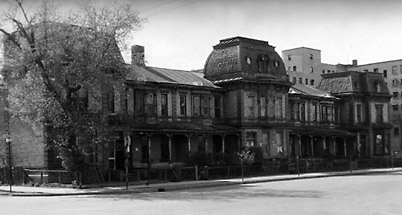
a couple of interesting before and afters.

james street behind the pumping station

jamesparkingmn1.jpg


edmonton street

edmontonstreetod7.jpg
 
What was the demographics for those James Avenue walk-ups? Is that lower income housing of the time?

Yes. I'm not sure if these are exactly the same places, but in the 1911 census, 141-161 James Street were occupied by reasonably middle-class people but the places were almost all full of lodgers, often 5 or 10 or more to an address. See here. If you remember that tiny lodger's room with the little cot that's up on the second floor of one of the buildings at the Urban Gallery at the Manitoba Museum, that is the sort of accommodation that many men really did have in many of these places.
 
Quick question for Andy or anyone else who may know: Is the Manitoba Clubhouse (1904) the oldest building on Broadway east of Osborne?
 
I think you might be right. I had just sent out an article saying the Manitoba Club was the oldest--alas.


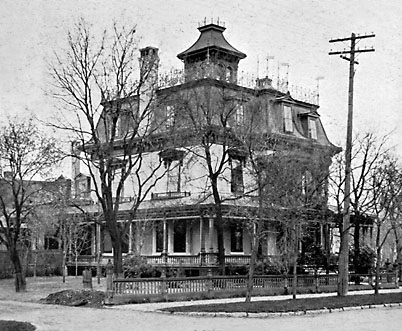
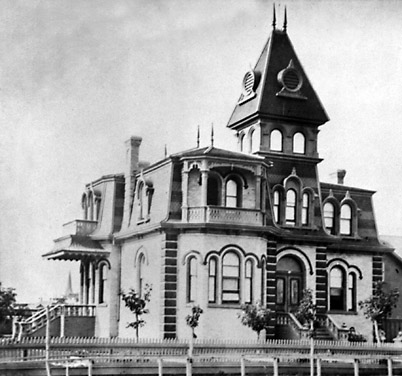
Those row-houses are some of the more tame examples of Winnipeg's positively wacky, Queen-Anne-on-mushrooms 1880s residential architecture...

06-153.jpg

S.H. Strevel house, location unknown

06-013.jpg

Pile of Bones Villa, location unknown

06-096.jpg

Wink's Terrace, location unknown

06-099.jpg

Hutchison's Terrace, location unknown

06-097.jpg

O'Brien's Terrace, location unknown

06-093.jpg

Another shot of that terrace on Edmonton Street, nearing the end of its life in the 1950s

Sadly, none of these beauties are around today.
 
Having done some structural inspections on a lot of older homes (large and small) and office type buildings around the city, it really seems to come down to blind luck depending on how well a structure holds up over the years.

The old strip footing foundations used back in the day for most smaller structures is woefully inadequate for our soil conditions here in the city (piles should be mandated here). The footings are usually too narrow and the drainage around the foundation collapsed or simply non-existent. Walking around these grand old houses today usually means cracking walls, useless foundations and shifty floors.

I would love to have a lot of these older row houses and homes around today, but just looking at that strip along Edmonton makes the structural engineer in me cringe. These type of buildings had they survived till today, would require a VERY substantial amount of TLC to make them even remotely viable.

Many of these structures were put up in the real estate boom of 1881-'82, and would have been slapped together to simply turn a profit. Besides, long-term survival wouldn't have mattered to the average Winnipegger of that time, because I'm sure they were expecting those houses would be replaced by large tenements and business blocks within a generation.

That said, there are many houses built in this era that stand in good condition today. My house is one example of this, but I'm sure it didn't hurt that the builder/occupant was a lumber merchant.
 
That said, there are many houses built in this era that stand in good condition today. My house is one example of this, but I'm sure it didn't hurt that the builder/occupant was a lumber merchant.

I think the actual builder of older houses in Winnipeg is the most important factor in determining how well a house has held up over the years. Actually, this fact probably hasn't changed, although modern building codes and permits will avoid the disparity in building quality that is obvious in certain pockets of this city.

For example some older pockets of houses in St. Boniface have some very questionable build quality in the homes, and the area around Mount Royal between Portage and Ness - a lot of these houses will not hit the century mark without major foundation and structural repairs. The builder in that particular area should have been arrested.
 
122285608_bad1fc7ba1_o.jpg

caption reads
Hare Krishnas chanting on Portage Avenue. Quite a common site on Portage Avneue and at the airport in the late 70's early 80's.
http://www.flickr.com/photos/ext504/122285608/

122891845_d2ba7396cf_o.jpg

North side of Portage looking east from Kennedy. I don't remember the Winnipeg Public library Branch on this corner. Must be late 70's or early 80's.
http://www.flickr.com/photos/ext504/122891845/

124436387_311339ee53_b.jpg

Selling Tribune newspapers on the corner of Donald and Portage on a snowy winter's day 1976. Disney's "No Deposit, No Return" playing at the Metropolitan Theatre.
http://www.flickr.com/photos/ext504/124436387/

134547937_fb8bb731a6_b.jpg

Portage Avenue looking east 1988
http://www.flickr.com/photos/ext504/134547937/
 
Last edited:
Here's a new old Winnipeg street map (1910) that I scanned last night: link.

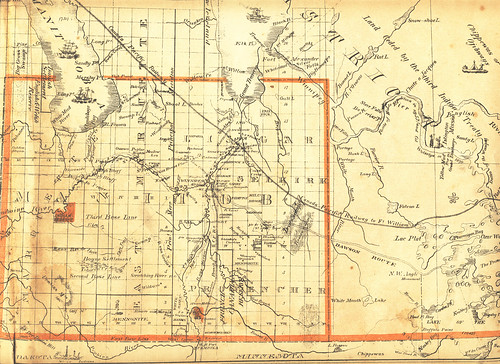
Also, one of my newest old Manitoba maps, showing the province in its original dimensions in 1876, just six years after it entered Confederation. There are hardly any settlements at this time outside of the longstanding settlements along the rivers, although a few post offices have sprung up and the Mennonite tracts have been designated, along with various other settler areas such as New Iceland and a "Danish Settlement" along the SW shore of Lake Manitoba.

2401464073_8d7fdece89.jpg
 
I remember seeing an older Winnipeg map in this forum showing streetcar lines running up Lipton and down Ruby street in Wolesley. (I think between Westminster and Portage)

Anyone remember seeing this map, and whether the streetcar system ever went down these streets?

I live on Lipton, and there is a strip of asphalt/concrete along the centre of the whole street that looks suspiciously like an area where rail lines were removed and filled in...


Back
Top