• City-versus-city activity is flat-out banned from being posted here in all its forms.

    City vs city trolling sets up a rather nasty and personal fight between forumers from one place and forumers from another place, potentially affecting hundreds of members any time it breaks out. Nothing good comes of versus-trolling, but long after the insults and mockery have been removed, bad feelings between individuals and between groups tend to linger, oftentimes popping up in unrelated threads for months afterwards.

    Thus, when it comes to 'versus' trolling, a line must be drawn--sharply. Anyone who crosses that line shall be disciplined, up to and including suspension and even summary banishment without warning. Forum moderation and administration shall be the arbiter of what constitutes versus-trolling, so if you think your post might be perceived as an unfair attack on an entire city that will upset residents there, tread lightly or reconsider how you intend to express your opinion. No forumer shall successfully claim ignorance of our policy against versus trolling, and no forumer should believe he can get away with it.

    The ban on versus activity applies to all posts and all threads, even ones that are not initially set up as city-versus-city.

    If you see any troublesome posts please report them using the "report a post" icon -
    report.gif
    in the upper right corner of every post on the forum.

Immigrant population of cities around the world


Chicago feels very Mexican. I know the stereotype is more Polish and black, but the Mexican presence is basically everywhere.

I remember going to Millennium Park late on a Sunday night and my (Mexican) wife asking if there was some Mexican event, bc there were masses of Mexican-American families. I think it was just a random summer Sunday night. It was also pretty late, so we guessed a lot of the visitors were in industries where you don't have to be in bed early for Monday office job, and so late night was available family time.

I wouldn't be surprised if it becomes majority Hispanic in next decade. They're replacing black and white enclaves.
 
Or received immigration from anywhere lol. The Chicago metro area's foreign-born population grew by nearly 250% between the 1950s and 2020s. New York metro by almost 150%. Detroit metro's? It grew by 17%.

1950 foreign-born population per metro
2,520,670…..New York
525,435….....Chicago
398,475….....Detroit

2024 foreign-born population per metro
6,143,359…..New York
1,825,700…..Chicago
467,634….....Detroit

If Detroit metro's foreign-born population had grown like Chicago's there would be at least 1 million more people in Metro Detroit today.

Well yeah, large amounts of newcomers from anywhere would have obviously sufficed.

The reason I referenced Mexicans spefically was because of how radically imbalanced their movement into the midwest has been. And not just because of the foreign born ones here now, but also the children and grandchildren of those who came from Mexico many decades ago.

The Chicago MSA has ~1,700,000 people of Mexican ancestry.

The Detroit MSA has ~150,000 people of Mexican ancestry.

If Detroit had received half the Mexicans that Chicago did over the past 75 years, plus their progeny (850,000) that would been an extra 700,000 people right there, just from Mexicans.

And then imagine if a significant % of those theoretical extra 700K Mexicans back-filled large swaths of Detroit proper that were abandoned by the white flighters, just as the Mexicans did in Chicago (and now also beginning to back-fill a few black flight areas as well).
 
Last edited:
That was the Renault Bagnole Merdeuse. Oops! I mean the Renault 5.

Haha! Thanks, I had to look up what that means. :P

I occasionally will see a Renault or Peugeot around SoCal with Mexican plates. I always like seeing cars sold in Mexico that aren't available in the US.
 
It is interesting why Detroit didnt get more Hispanics.

Is there a reason for this? It can't be the weather.
 
It is interesting why Detroit didnt get more Hispanics.

Is there a reason for this? It can't be the weather.

I just looked it up; during the Great Depression, Detroit was heavily into the Mexican Repatriation program, which was supported by the federal government, but was largely organized by city and state governments. And of course in car industry Detroit, they saw it as a form of "job protection" for whites.

My guess is after that, Hispanics were less likely to move to Detroit. Kind of like how some SoCal suburbs that were sundown towns still have low African-American populations; the older generations told of horror stories about, say, Glendale.
 
It is interesting why Detroit didnt get more Hispanics.

Detroit doesn't have a lot of Hispanics, but I wouldn't say it's unusually low for that part of the country. Much of the Rust Belt doesn't have many Hispanics. Metros like Pittsburgh, Cleveland, Cincy and St. Louis have even fewer. Chicago is more the outlier than Detroit.
 
^ true. Chicago is absolutely the outlier, regionally speaking.


Midwest/Rustbelt 1M+ MSAs by latino share (2020):

chicago: 2,239,376 (23.3%)

milwaukee: 182,777 (11.6%)
kansas city: 229,233 (10.5%)
grand rapids: 110,671 (10.2%)
indianapolis: 177,787 (8.4%)
rochetser: 88,854 (8.1%)
minneapolis: 242,621 (6.8%)
cleveland: 133,862 (6.4%)
buffalo: 67,476 (5.8%)
columbus: 110,967 (5.2%)
detroit: 219,953 (5.0%)
cincinnati: 95,073 (4.2%)
st. louis: 106,269 (3.8%)
pittsburgh: 52,920 (2.2%)
 
Right, and the Milwaukee, Indy and GR pops are Chicago Mexican overflow, and the Rochester, Buffalo and Cleveland pops are NYC PR overflow. For whatever reason, not a ton of Hispanics.
 
Renault and Peugeot left the US market in 1987 and 1991 respectively, because of their unreliability, and competition from other more reliable brands and dealership availability.
It's all just a pretext. Peugeot cars are known in Europe to be extremely reliable. We had similar conversation on SSC a few years ago, and the Brits just couldn't understand this "not reliable thing" that the American forumers were saying, because in Britain Peugeot is extremely popular and known for its reliability.

My parents bought a Peugeot sports car that is now 10 years old (time flies!) and it's still like almost brand new. I've driven it from Venice in the East, to Denmark in the north, to Murcia in the south, I've climbed the highest Alpine passes with it, driven 120 miles per hour with it on the German freeways, it's just great, super manœuvrable, accelerates like crazy when the light turns green (no one can pass me when I start at the green light). I think we can keep it 10 more years.

The real reason they left is not unreliability. The reason is the same probably Auchan left. They didn't want to make the big investments required to penetrate such a massive, competitive, and litigious market as the US market. They thought it wasn't worth it (I think they were wrong). They were happy to develop in other countries.
 
I occasionally will see a Renault or Peugeot around SoCal with Mexican plates. I always like seeing cars sold in Mexico that aren't available in the US.
French cars have a big presence in Mexico. Actually I was in touch with the French car makers there for my job. They have big plants in central Mexico.
 
I'm old enough to remember the Renault Le Car:
renault_lecar_1979_web4a-fdc.jpg


I don't know what this model was called outside the US. I think it was sold in the US in the late 1970s to about 1981.

Teenagers in my area used to write "Le Car" on the dusty doors of unwashed cars.

I have no idea where you bought a "Le Car" or other Renaults. It was one of those things you saw once every two months or so. Were they sold at VW dealerships or some other importer? I have no recollection of ever seeing them new on dealer lots.
 
It's all just a pretext. Peugeot cars are known in Europe to be extremely reliable. We had similar conversation on SSC a few years ago, and the Brits just couldn't understand this "not reliable thing" that the American forumers were saying, because in Britain Peugeot is extremely popular and known for its reliability.

My parents bought a Peugeot sports car that is now 10 years old (time flies!) and it's still like almost brand new. I've driven it from Venice in the East, to Denmark in the north, to Murcia in the south, I've climbed the highest Alpine passes with it, driven 120 miles per hour with it on the German freeways, it's just great, super manœuvrable, accelerates like crazy when the light turns green (no one can pass me when I start at the green light). I think we can keep it 10 more years.

The real reason they left is not unreliability. The reason is the same probably Auchan left. They didn't want to make the big investments required to penetrate such a massive, competitive, and litigious market as the US market. They thought it wasn't worth it (I think they were wrong). They were happy to develop in other countries.

I don't doubt that back in the 1980s, those French cars were not reliable, otherwise they would have stayed in the American market. Even now, European and American cars are generally not seen as reliable as compared with Japanese cars (Nissan not included). The worst car I had was my 2012 Mini Cooper. Such a lemon!
 
Barcelona's FUA covers 4,256 km² of land area (not 2,600 km²). That's very large, considering it's a coastal metro area, so half of its territory would be the sea. In terms of distance from the city center, it's more or less equivalent to a metro area of 8,510 km² that is fully inland. Toulouse's FUA covers just 6,520 km², which means it's less extended than Barcelona's.


15% is low, but they wanted to catch the wider influence of cities. The French statistical office used a 40% threshold before finally adopting the international FUA definition. But the difference is not that large anyway. For Paris, switching from 40% to 15% threshold only increased the metro area population by a few hundreds of thousands of inhabitants (certainly less than 1 million).

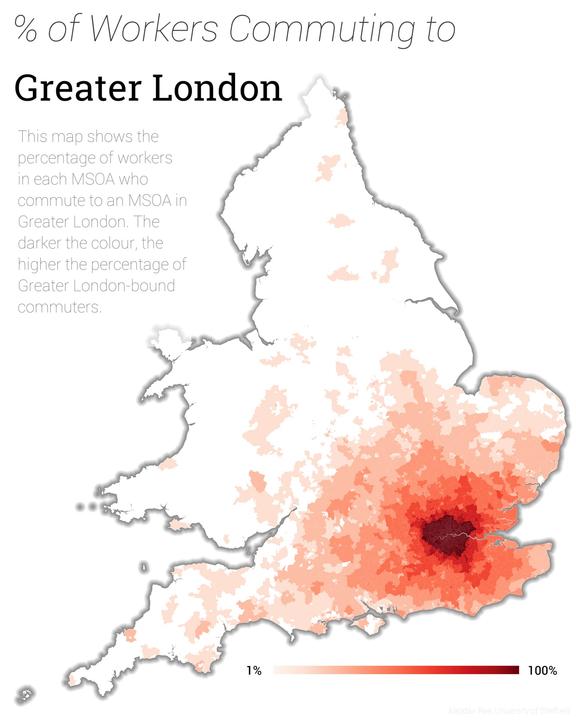
And for London, I hope you realize that if they had used a 40% threshold, or even a 50% threshold that would sound intuitive (majority of people commuting to the core city), then the London FUA would have had a considerably smaller population, because most of the districts surrounding Greater London have rather smallish percentages of people in employment commuting to Greater London. It's only thanks to a low 15% threshold that London's FUA could include many districts around Greater London.


There's a reason why the international FUA was developped. That's because the old urban area (as defined by the UN) is increasingly meaningless. For example a Cairo-Alexandria urban area that encompasses all the delta of the Nile due to now near complete contiguous settlements is a meaningless thing. Someone from Alexandria and someone from Cairo do not belong in any respect to the same city (whatever meaning we give to the word city). Same for a Guangzhou-Hong Kong urban area, it's a meaningless thing. Or in England a Manchester-Liverpool urban area. Or along the Rhine a Bonn-Cologne-Düsseldorf-Rotterdam urban area. The traditional concept of urban area has long stopped making any sense due to the sprawl of urban areas.


Yep by the 40-50% threshold would make ALL cities considerably smaller too, and imo that would be more accurate and representative for what makes a 'functional' city - not 15%. Once again it's not about trying to inflate city size, London or not, but accuracy -what do the other 85% of people do?

Tbh I don't really buy that people commuting into a city makes that an extension of the city, they are their own towns and villages themselves, in their own right. I don't see the small town of Newbury and think, ah London (or even ah, a dormitory of London). It has its own functioning centre full of shops, its own attractions, schools, nightlife, council, office parks.

a94ae7c1bfefcd9f13a182852407a764.max1024.jpeg


London has a high amount of commuting for the region, however the FUA will not consider the further parts unlike a MSA/ CSA due to the bittyness of the Green Belt. 900,000 commute into it every day, just like Paris or NYC.

This, half of which would look very similar to a regional CSA:

s.jpg


...compared to this, which weirdly only really captures the north east side, that's much more sparse than the hyper-dense west. Not even parts of the FUA are included:
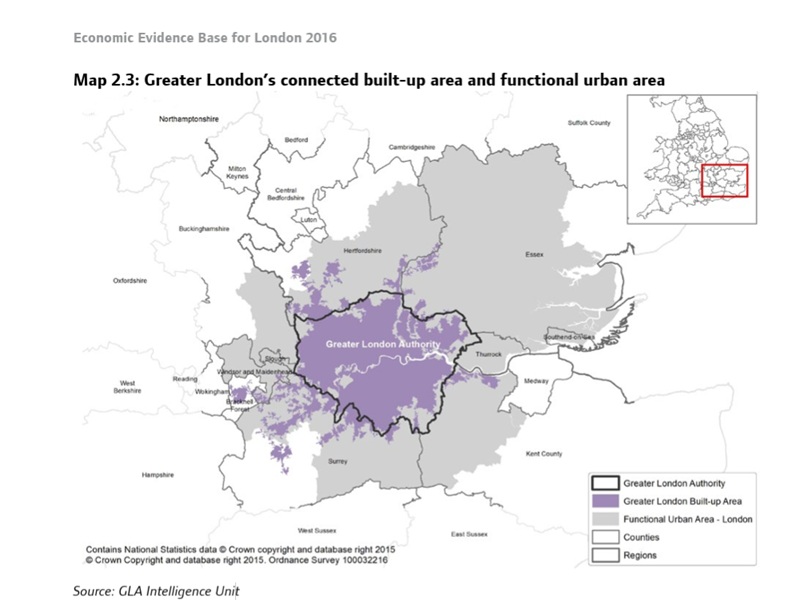
ss.jpg


And a contiguous city does count imo, it makes it the one urban entity. You can literally walk from one end to another should you wish, you can go in and out of all the centres in it (not like there's some kind of invisible barrier of separation). Otherwise you'd need to excise Yokohama from Tokyo, Foshan from Guangzhou, Long Beach from LA etc. We're not talking the 220km between Alexandria to Cairo, dotted with towns and villages in between, but the places that are one contiguous, continuous city, where you can walk on streets surrounded by buildings from one end to another. That's what's happening in the Pearl River City (not to be confused with the wider Pearl River Delta), which the World BAnk considers the world's largest city. It's not like the Nile Delta, not like a typical megalopolis like the Eastern Seabord or Blue Banana, with gaps.

For example, Hong Kong, Macau, Huizhou are part of the PRD, but not the PRC:

f7k0hnc2mlsa1.png
 
Last edited:
Yep by the 40-50% threshold would make ALL cities considerably smaller too, and imo that would be more accurate and representative for what makes a 'functional' city - not 15%. Once again it's not about trying to inflate city size, London or not, but accuracy -what do the other 85% of people do?
Currently the London FUA is less than 1 million inh. smaller than the Paris FUA, but it we used a 40-50% threshold it could easily be 2.5 million inh. smaller than the Paris FUA.

I don't see the small town of Newbury and think, ah London (or even ah, a dormitory of London). It has its own functioning centre full of shops, its own attractions, schools, nightlife, council, office parks.

a94ae7c1bfefcd9f13a182852407a764.max1024.jpeg
And Newbury ISN'T part of the London FUA, precisely because too few people commute to London.

...compared to this, which weirdly only really captures the north east side, that's much more sparse than the hyper-dense west. Not even parts of the FUA are included:

ss.jpg
You've answered the question yourself. If western areas are dense, that means they have their own strong urban centers that work independently from London. Rural areas, on the other hand, don't have strong urban centers, and are therefore entirely attracted by London.

And a contiguous city does count imo, it makes it the one urban entity. You can literally walk from one end to another should you wish, you can go in and out of all the centres in it (not like there's some kind of invisible barrier of separation).
You can walk from the Dutch border to the French border all along the Belgian coast without ever leaving built-up streets I believe, yet that doesn't make it a giant city of 50 km.

Strand_von_Oostende_Belgien_Nordsee_Urlaub_and_Skyline_fccf91ec82.jpg
 
I think I'll put this here, not the same as immigrants, but related...

Combined Statistical Areas by Population
That Speaks a Language other than English, 2024:

8,723,068---Los Angeles-Long Beach
8,123,377---New York-Newark
3,852,092---San Jose-San Francisco-Oakland
3,423,835---Miami-Port St Lucie-Ft Lauderdale
2,814,692---Houston-Pasadena
2,754,630---Chicago-Naperville
2,467,679---Dallas-Ft Worth
2,320,589---Washington-Baltimore-Arlington
1,861,252---Boston-Worcester-Providence
1,305,495---Atlanta-Athens-Sandy Springs
1,247,640---Philadelphia-Reading-Camden
1,245,118---Orlando-Lakeland-Deltona
1,209,344---Phoenix-Mesa
1,110,055---Seattle-Tacoma
846,954-----San Antonio-New Braunfels-Kerrville
744,160-----Las Vegas-Henderson
733,751-----Sacramento-Roseville
712,931-----McAllen-Edinburg
689,681-----Detroit-Warren-Ann Arbor
669,123-----Denver-Aurora-Greeley
650,767-----El Paso-Las Cruces
565,396-----Minneapolis-St Paul
562,603-----Portland-Vancouver-Salem
541,410-----Fresno-Hanford-Corcoran
521,899-----New Haven-Hartford-Waterbury
465,629-----Charlotte-Concord
445,582-----Salt Lake City-Provo-Orem
393,058-----Raleigh-Durham-Cary
350,100-----Cape Coral-Ft Myers-Naples
310,424-----Albuquerque-Santa Fe-Los Alamos
304,230-----Cleveland-Akron-Canton

Combined Statistical Areas by Percent of Population
That Speaks a Language other than English, 2024:

80.8%--McAllen-Edinburg
63.3%--El Paso-Las Cruces
51.2%--Miami-Port St Lucie-Ft Lauderdale
49.9%--Los Angeles-Long Beach
44.7%--San Jose-San Francisco-Oakland
43.7%--Fresno-Hanford-Corcoran
39.4%--Houston-Pasadena
38.9%--New York-Newark
33.1%--Las Vegas-Henderson
32.9%--San Antonio-New Braunfels-Kerrville
30.9%--Dallas-Ft Worth
29.6%--Orlando-Lakeland-Deltona
29.4%--Chicago-Naperville
28.8%--Cape Coral-Ft Myers-Naples
28.6%--Sacramento-Roseville
27.9%--Albuquerque-Santa Fe-Los Alamos
25.2%--Phoenix-Mesa
24.4%--Washington-Baltimore-Arlington
23.4%--Boston-Worcester-Providence
23.4%--Seattle-Tacoma
20.6%--New Haven-Hartford-Waterbury
19.4%--Atlanta-Athens-Sandy Springs
19.2%--Denver-Aurora-Greeley
18.0%--Portland-Vancouver-Salem
17.8%--Philadelphia-Reading-Camden
17.8%--Raleigh-Durham-Cary
14.8%--Charlotte-Concord
14.6%--Minneapolis-St Paul
13.5%--Detroit-Warren-Ann Arbor
8.6%---Cleveland-Akron-Canton
 
Don't think it was posted upthread, but this NYTimes infographic is fascinating.

There are some limitations, unfortunately. For example, in most Jewish neighborhoods, people don't specify an ethnicity, so if you go to somewhere like Borough Park you get really weird results (Ashkenazi and Sephardim should really be reported ethnic groups).

But you get a lot of granularity you don't get otherwise. You can see where in the Detroit metro Chaldeans live, versus Yemenis, for example. Or see that the black population in southeastern Queens is heavily Jamaican.
 
The railroad went directly from central mexico to chicago factories and workers from Guanajuato, Michoacan, Jalisco were recruited via this method. The first waves really started settling in chicago earlier in the 20th century and they provided a base for the bigger waves that came by later in the 70s and 90s.


Back
Top