Canadian Skyline Thread III


I'm kinda surprised Toronto is that far ahead of Chicago in the buildings over 100m category.

As for 150m+ I'd like to see Montreal be around Boston and Seattle.

All of that being said, street level matters most and Montreal pretty much crushes everywhere in Canada/USA, besides NY. Overall, Montreal does better than Toronto in my humble opinion.
 
All of that being said, street level matters most and Montreal pretty much crushes everywhere in Canada/USA, besides NY. Overall, Montreal does better than Toronto in my humble opinion.

I don't know. Montreal is up there, but Boston has amazing, beautiful historic neighbourhoods. Then there's Philadelphia, Chicago, San Francisco...

And Toronto has improved a lot. Montreal has more historic medium density areas, but Toronto has much larger "metropolitan" feeling high density areas.
 
Well, it depends on where you go. Someplace like Mile End in Montreal is no less built up or vibrant than some older neighbourhoods that are about as far away from downtown Toronto, like maybe Little Italy. It's not a huge gap and it is sometimes closed with modern infill but the typical building stock is rowhouses vs. triplexes.

Toronto used to have some oddly modest neighbourhoods quite close to the inner parts of the city. They have shrunk and gentrified, but some are still there. Partly they're a reflection of how quickly the city has grown, but it's also funny how long they have held on. I guess zoning and property ownership might have something to do with it. Maybe some are public housing.
 
Sometimes I wonder what it would have been like to be an Argentina where Toronto and Montreal were combined into one megacity. There are elements of both have that I miss when I'm in the other. While Toronto's urban nabes are nice, they're much more standard and less metropolitan than Montreal's duplex and triplex nabes. Whereas I miss downtown Toronto's grand scale, height and intensity as well as the highrise nodes to a lesser extent. Especially Union station which, as nice as Gare Centrale is, doesn't really compare for me.

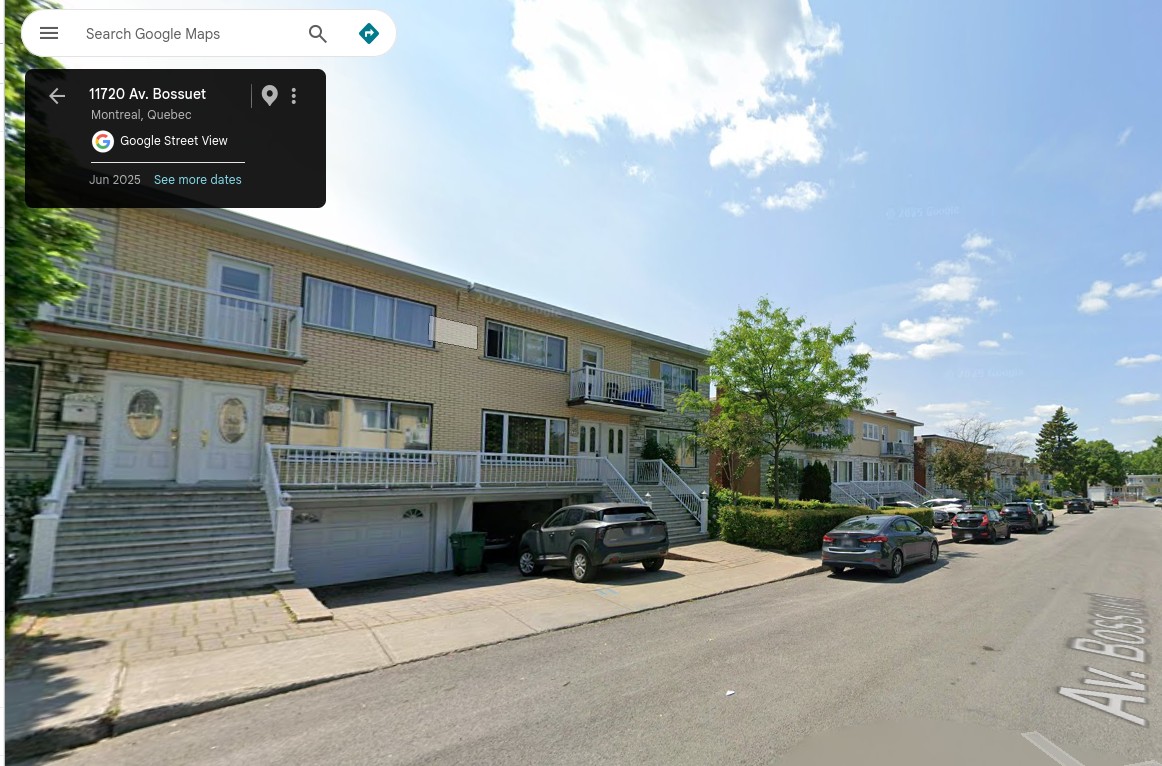
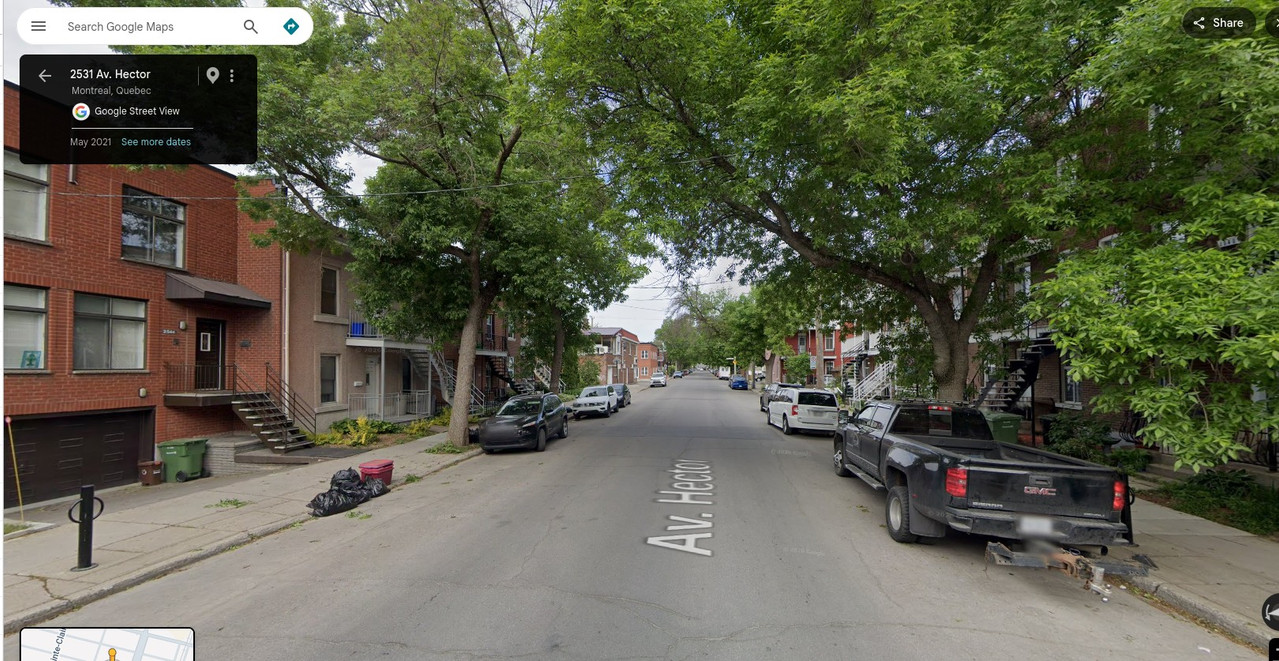
In Montreal, you can go over 10km from downtown using the station as an anchor point and see built form like these. And there are fairly significant swathes of this; it isn't just a street or two.


These are both about 13km from Gare Centrale, a similar distance as Yonge/Sheppard from Union. While it isn't like that consistently for Montreal at that distance, I can't think of anywhere that far from Union where this is the scale of lowrise residential density despite Toronto being a much larger metro areas. This is what having an abundance of missing middle housing looks like. Yet there are people who think a few blocks of that scale right in or near downtown dispels the idea that Toronto is lacking in that regard.
 
I don't know. Montreal is up there, but Boston has amazing, beautiful historic neighbourhoods. Then there's Philadelphia, Chicago, San Francisco...

And Toronto has improved a lot. Montreal has more historic medium density areas, but Toronto has much larger "metropolitan" feeling high density areas.

Toronto feels much bigger at street level than Montreal does.

The historic, truly vibrant parts of the American cities mentioned feel a lot smaller than the total collective of vibrant Montreal neighbourhoods, in my humble opinion. It's just my opinion.

No argument that "Toronto feels much bigger" as it's Canada's closest equivalent to a NY while being a lakefront city like Chicago.

Toronto has improved a lot, but I'd argue that maybe Toronto has gone slightly too far in demolishing older parts of the city for endless highrise towers. What made Toronto great wasn't downtown and flashy skyscrapers soaring ever higher, it was the leafy, older streetcar oriented neighbourhoods each with its own feel. This is just my opinion.

Where Montreal beats Toronto to me is the public spaces, parks/parklets, landscaping, the pedestrianizing of streets during summer. Encouraging bike ridership. The city feels like its fully embracing the pedestrian. The feeling of "relax and enjoy your leisure time" with a couple of cans of beer, cider or sharing a bottle of wine with your friends outdoors in public spaces.
 
Youtuber Dan Vineberg, former Winnepegger turned Montrealer helps encapsulates my thoughts on Montreal:

• Video Link


Apologies to the forum sticklers for getting off topic. :D
 
Youtuber Dan Vineberg, former Winnepegger turned Montrealer helps encapsulates my thoughts on Montreal:

• Video Link


Apologies to the forum sticklers for getting off topic. :D

Montreal just does its thing. Je ne sais quoi. And it does it very, very well.

It doesn't feel New Yorkish (well, not Manhattanish, but maybe Brooklynish in some spots) like parts of Toronto. It doesn't have the incredible natural beauty of Vancouver.

But those neighborhoods just outside of downtown, that extend for miles in pretty much every direction...there is just a summer vibe there that exists nowhere else, on that same scale, anywhere in Canada.

Pound for pound, nobody does neighborhoods better than Montreal. It is almost as though Montreal has just the right level of gentrification, to reinvigorate its inner city neighborhoods without pricing out the locals. Of course, there are exceptions to this rule...
 
Pound for pound, nobody does neighborhoods better than Montreal. It is almost as though Montreal has just the right level of gentrification, to reinvigorate its inner city neighborhoods without pricing out the locals. Of course, there are exceptions to this rule...

I have always thought that it was a bit resistant to some modern trends for a couple reasons. It is older and so has hung on to more of that very physically rooted vibrancy, commercial activity, and lifestyle. It was always higher density so as population densities and demands for local services fell, it was easier for more of the city to stay on the positive end of that tipping point. It was still pretty decently vibrant even through the doldrums of the 70s-90s.

A "streetcar suburb" with mostly detached houses needs very high incomes or a lot of visitors to sustain a good mix of shops and restaurants today, but it's easier to hit that with triplexes.

Some marginal historic areas of Canadian cities have made the transition through modern infill.
 
Well, it depends on where you go. Someplace like Mile End in Montreal is no less built up or vibrant than some older neighbourhoods that are about as far away from downtown Toronto, like maybe Little Italy. It's not a huge gap and it is sometimes closed with modern infill but the typical building stock is rowhouses vs. triplexes.

Toronto used to have some oddly modest neighbourhoods quite close to the inner parts of the city. They have shrunk and gentrified, but some are still there. Partly they're a reflection of how quickly the city has grown, but it's also funny how long they have held on. I guess zoning and property ownership might have something to do with it. Maybe some are public housing.


To expand on this idea a bit, the traditional inner city (non-downtown) housing stock of Montreal is a clear "tier" above Toronto's density & aesthetics-wise, but subsequent infill and sheer critical mass in Toronto have narrowed the gap somewhat. And despite the housing gap, the commercial streets in Toronto seem busier, more consistenly vibrant, and more extensive than their Montreal equivalents.
 
A "streetcar suburb" with mostly detached houses needs very high incomes or a lot of visitors to sustain a good mix of shops and restaurants today, but it's easier to hit that with triplexes.

In Toronto, that would include the Beaches and to a lesser extent along St. Clair West. Detached homes are pretty rare closer to the city center.
 
I think a comparison of the urbanity of Toronto and Montreal would make a good discussion in its own thread, but how not to descend into "city vs city" posting?
 
For city limits,
Toronto is 3.27 million
Montreal is 1.915 million
Having an extra 1.35 million people in the city proper certainly helps! (and the Toronto CMA is far larger)

https://doi.org/10.25318/1710015501-eng

I'd agree that the number of people living within a given distance from downtown matters, but I don't think it makes much difference whether the city limits extends far enough to include them all or not. Montreal's land area of 364.74 km2 is only 58% the size of Toronto's 631.1 while Montreal's 1.915 million people is 58% as much as Toronto's 3.27 million. So while the difference in metro area size makes a big difference but I don't see the difference in cities proper having much relevance.
 
I'd agree that the number of people living within a given distance from downtown matters, but I don't think it makes much difference whether the city limits extends far enough to include them all or not. Montreal's land area of 364.74 km2 is only 58% the size of Toronto's 631.1 while Montreal's 1.915 million people is 58% as much as Toronto's 3.27 million. So while the difference in metro area size makes a big difference but I don't see the difference in cities proper having much relevance.

Had the same thought. Toronto's boundaries are also pretty clean and logical while Montreal is a jumbled mess that includes some mostly uninhabited island 30km away from Downtown, but not denser adjacent neighborhoods.
 
Bloor Street south to the lake.

img_9007-jpeg.741180

TysonR
 
# of buildings over 100m+

NYC 884
Toronto 403
Chicago 356
Miami 150
Houston 115
San Francisco 100
Atlanta 98
Los Angeles 88
Calgary 83
Seattle 75
Montreal 73
Vancouver 72
Philadelphia 65
Boston 59
Dallas 58
Austin 52

150m+

NYC 324
Chicago 137
Toronto 108
Miami 69
Houston 40
Los Angeles 32
San Francisco 27
Boston 26
Seattle 22
Calgary 20
Dallas 20
Jersey City 20
Atlanta 18
Austin 18
Montreal 18
Philadelphia 18
(Vancouver 7)
I find the Vancouver stats always misleading because the city itself is so small but the transit node skylines that have so many skyscrapers and some of the tallest in the metro aren't included in the total.

The Vancouver metro area has 176 (100m+) and 30 (150m+) which would put it more at #4 and #7 respectively. The transit node high-rise development is largely specific to Canadian cities, mostly Vancouver, Toronto and recently Ottawa, so I doubt expanding the count like this for others on the list would have much of a change to the numbers other than maybe Toronto if you include Mississauga etc.
 
Last edited:


Back
Top