Winnipeg | Portage and Main

Should Portage and Main be open for pedestrian traffic?

  • Yes

    Votes: 113 92.6%
  • No

    Votes: 9 7.4%

  • Total voters
    122
  • Poll closed .

Ha ha...what's not to believe?! It was under 201. Closed. Now its opening in the Curry Building at the sidewalk.

Obviously, it would be best if the skywalks were never built, but accepting that reality, I have long believed that the solution is to make them completely integrated with the sidewalks...lots of well-marked entrances and exits so pedestrians can seamlessly go between one and the other.

This. They would be used a lot more if they had direct access. The way points have always been terrible and not obvious, even when you got into the buildings
 
Ha ha...what's not to believe?! It was under 201. Closed. Now its opening in the Curry Building at the sidewalk.

Obviously, it would be best if the skywalks were never built, but accepting that reality, I have long believed that the solution is to make them completely integrated with the sidewalks...lots of well-marked entrances and exits so pedestrians can seamlessly go between one and the other.

GREAT to see a "new" storefront on Portage, don't get me wrong, but this is not quite a relocation. The one underground in 201 Portage closed Dec 2023, that was 2.5 yrs ago. and ING Market are franchises so this is more of a "NEW" not a relocation.
 
‘It really speaks to the heart of the city’
Mayor calls Portage and Main reopening a success

Chris Kitching
Thursday, Jun. 25, 2026

4345487_web1_250708-Portage-Main-crossing-2-.jpg

RUTH BONNEVILLE / FREE PRESS FILES

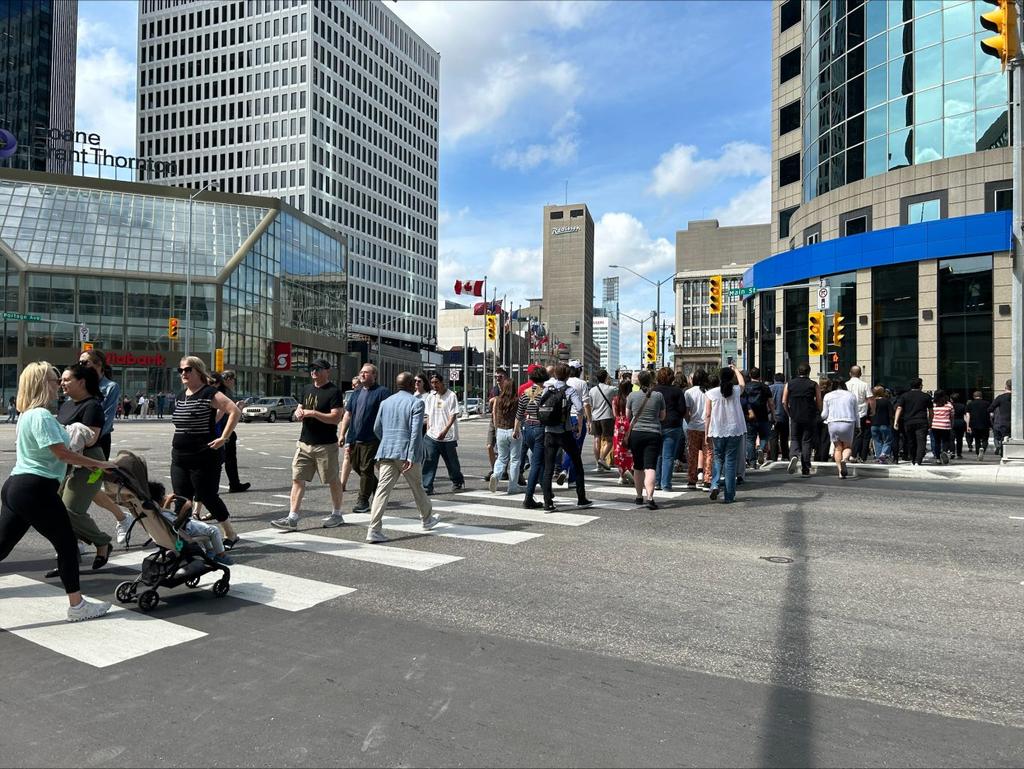
Saturday marks the one-year anniversary of the intersection’s reopening to foot traffic.


Mayor Scott Gillingham has hailed the reopening of Portage Avenue and Main Street as a success, nearly a year after the downtown intersection became accessible to pedestrians again.

The future of the underground concourse is still up in the air, while city staff conduct a cost-benefit analysis and consult the owners of the buildings at Portage and Main.

“I’m glad we made the decision to reopen Portage and Main. It’s working well, it looks great,” Gillingham said. “So many people that were opposed to it told me now they’ve changed their mind. They’re glad we did it.”

Saturday marks the one-year anniversary of the intersection’s reopening to foot traffic. Portage and Main had been closed to pedestrians since 1979 as part of a commercial development deal.

“Yes, it’s just an intersection, but it’s an iconic intersection. It really speaks to the heart of the city,” Gillingham said.

“To see people be able to walk across that intersection — use it as pedestrians like they use thousands of other intersections in Winnipeg — I think is an important statement about the future of our city. We’re building, we’re progressing and we’re going to keep going.”

Council voted to get rid of the concrete barricades and redesign the intersection because it was a less costly option, after a staff report in 2024 said it would cost $73 million and cause up to five years of traffic disruption to dig up the road and replace the waterproof membrane that protects the concourse. The work would have to be repeated decades later.

City staff are expected to submit a report about the future of the concourse to council in January 2027. A consultant previously concluded it would cost about $11 million to fully decommission the concourse.

Gillingham said staff are consulting property owners, and looking into whether there are options to address the problem of water getting into the concourse.

He said some of the membrane that was problematic was replaced when the intersection was redesigned for its June 2025 reopening. He did not know how much of the membrane was replaced.

“It may be that now the issue is not as large as it once was, but that’s what staff are looking at,” Gillingham said.

The Building Owners and Managers Association of Manitoba, which represents some buildings linked to the concourse, has advocated for the concourse to stay open.

“It would certainly appear that the vast majority of pedestrian crossings at Portage and Main — particularly during the business day — are still taking place at concourse level,” executive director Tom Thiessen wrote in an email to the Free Press.

“The underground concourse benefits hundreds of thousands of downtown visitors, employees, and residents every year. Our expectation is that the city commits to repairing and maintaining this critical piece of downtown infrastructure.”

Winnipeg Free Press
 
Gillingham said staff are consulting property owners, and looking into whether there are options to address the problem of water getting into the concourse.

He said some of the membrane that was problematic was replaced when the intersection was redesigned for its June 2025 reopening. He did not know how much of the membrane was replaced.

“It may be that now the issue is not as large as it once was, but that’s what staff are looking at,” Gillingham said.


Winnipeg Free Press

As predicted, the Mayor appears to be slowly pivoting the narrative toward closing the concourse.
 
As predicted, the Mayor appears to be slowly pivoting the narrative toward closing the concourse.

Perhaps the Mayor isn't changing his tune because the businesses still seem to have no intention of ponying up any money for the repairs.

A comment from the "Building Owners and Managers Association of Manitoba":

"Our expectation is that the city commits to repairing and maintaining this critical piece of downtown infrastructure.”

Translation: we expect the city to pay for the whole thing so we can benefit.

Doesn’t the City have a clear obligation to maintain the infrastructure it owns? The Richardson buildings, 201 Portage, and 360/300 Main have each made substantial investments in their portions of the concourse. These properties contribute millions in property taxes annually those dollars should be used to maintain the city owned concourse.
 
What did the original agreement say?

In general I would say if the City owns it, they need to maintain it. They also have the right to close it. I wouldn't call this underground concourse "critical" to the survival of the City, the way the property owners are. It's an enclosed walkway. They're both still posturing, the City and the property owners.

I believe property owners would strongly argue that closing the concourse would negatively affect their property values. It would reduce usage of their underground portions, create dead space, and lead to higher CRU vacancies — all of which would lower rental income. At the same time, most people who live and work in the area and regularly use the concourse would likely support keeping it open.
 
Doesn’t the City have a clear obligation to maintain the infrastructure it owns? The Richardson buildings, 201 Portage, and 360/300 Main have each made substantial investments in their portions of the concourse. These properties contribute millions in property taxes annually those dollars should be used to maintain the city owned concourse.

Wasn't the whole idea of the underground concourse both a "city" and a "Trizec" idea originally? I think "way back when" the city was pretty pumped to have any kind of new downtown construction and were sold on the underground walkway as kind of a "win-win" with the developer. The city would have freer traffic flow around P & M and the developer would have a funnel to draw pedestrians onto their property. I guess my point is I don't think the underground walkway would have been on the city's radar without some pretty strong encouragement from the developer. The concourse wasn't a standard piece of city infrastructure, it was a request (or maybe a demand?) from the developer. Because of that I don't think it's out of bounds to ask the stakeholders who benefit from that specialty construction to chip in a few bucks. Just IMO, of course, for whatever that's worth.
 
Today I found a CBC Manitoba article from Feb 2017 in which Brent Bellamy aka our TRUEVIKING was talking about the detail of what was proposed to be built underground.

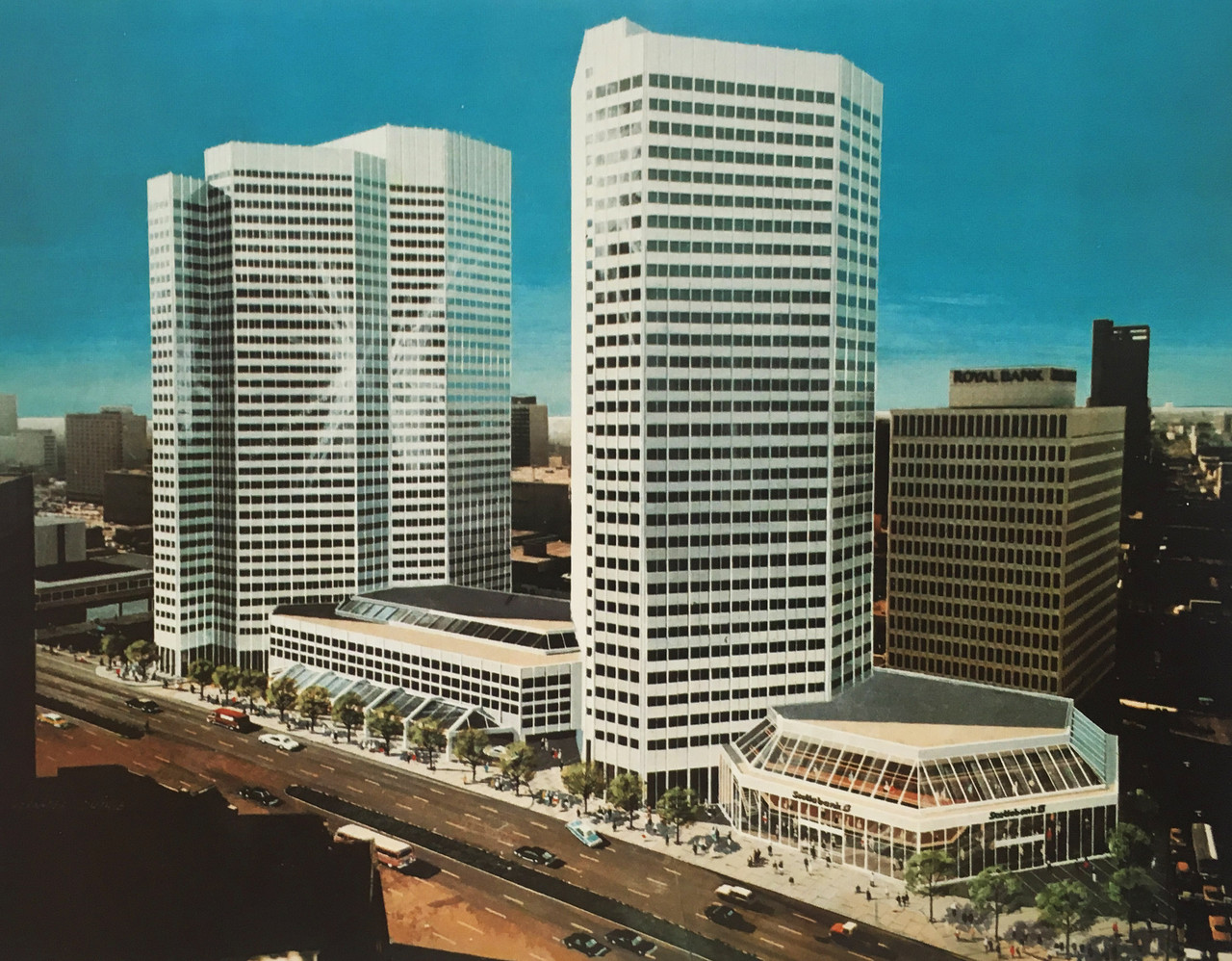
"The city at the time was not in great economic straits. They were looking for development very much, and there was a big developer that came in that promised to do two towers and a big, Garden of Eden-type underground development," said Brent Bellamy, creative director at Number Ten Architecture in Winnipeg.

"If you see the original images, it's quite spectacular," he said.

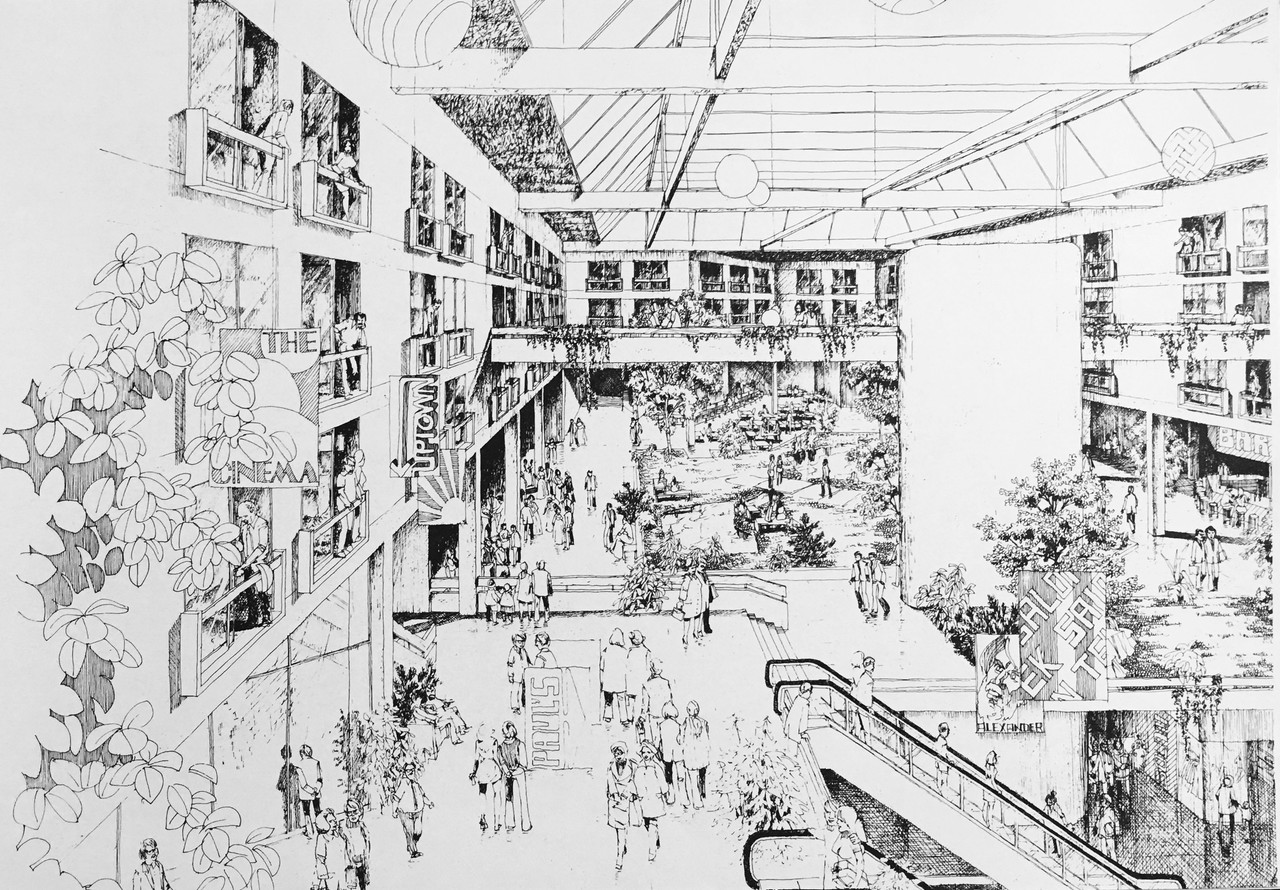
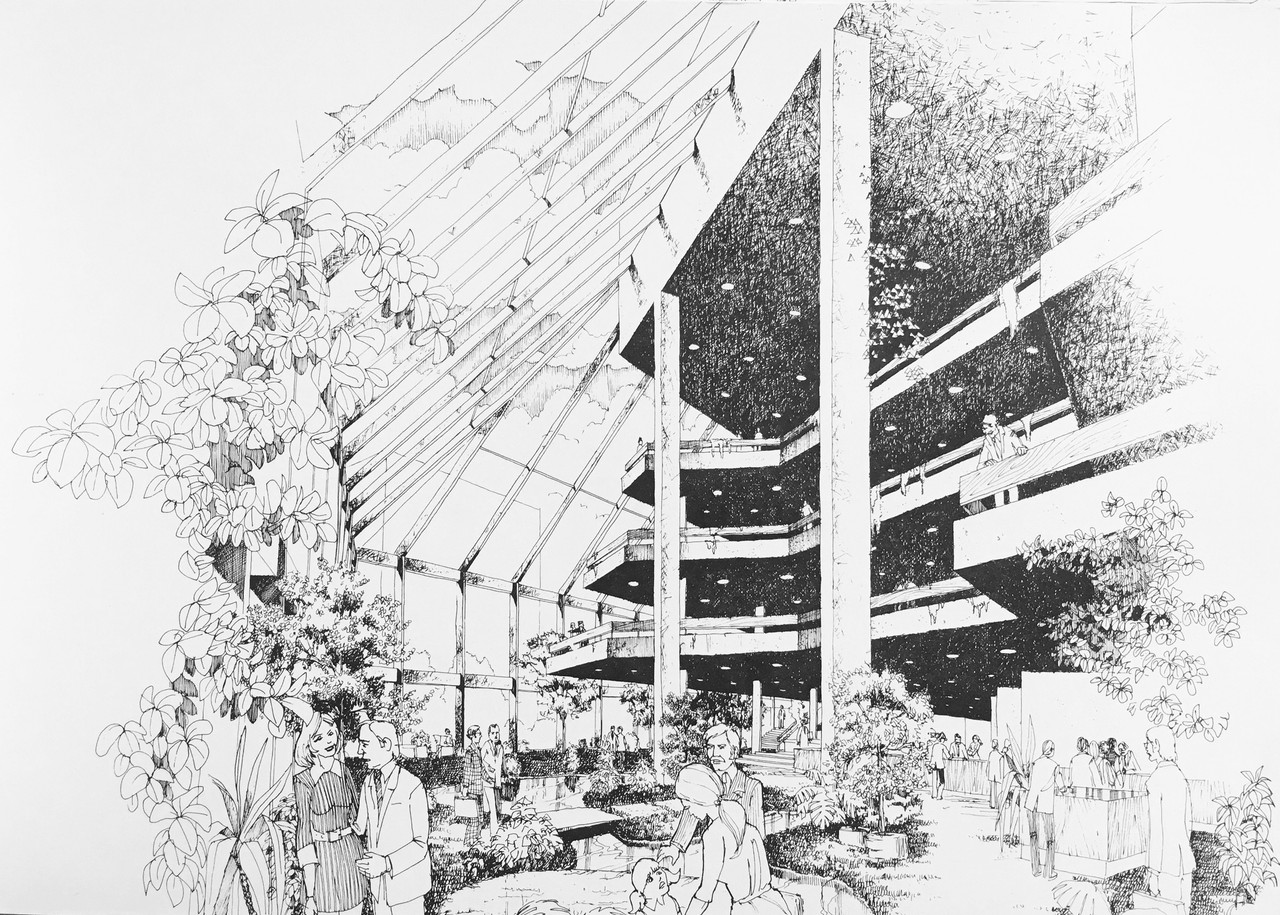
The original drawings depicted an underground gathering area several levels deep, with overhanging, interconnected spaces featuring bowling alleys, theatres and high-end restaurants, Bellamy said.

It was presented as "a wonderful, underground Nirvana," he said, connected to a 30-storey skyscraper and a ritzy new hotel promised by the developer.

"The city was just salivating over that," Bellamy said.

Up until today I had never heard about the enhanced underground development, I always thought what we ended up with is what was proposed to the city.

Full interview here with more information on the whole underground concept https://www.cbc.ca/news/canada/manitoba/winnipeg-portage-main-concourse-anniversary-1.3997314
 
It was presented as "a wonderful, underground Nirvana," he said, connected to a 30-storey skyscraper and a ritzy new hotel promised by the developer.

Yep, promises, promises. Did the developer ever really intend to deliver on their promises, or was this just another bait-and-switch? The answer is lost in time, I fear.
 
I believe property owners would strongly argue that closing the concourse would negatively affect their property values. It would reduce usage of their underground portions, create dead space, and lead to higher CRU vacancies — all of which would lower rental income. At the same time, most people who live and work in the area and regularly use the concourse would likely support keeping it open.

Would it be stupid to close the underground? Yes of course. Is it really critical though, again I think not.

When someone says critical infrastructure. To me it relates to things required for sustaining life and society. Like water supply, electricity, hospitals, housing. Not an underground walkway.
 
Today I found a CBC Manitoba article from Feb 2017 in which Brent Bellamy aka our TRUEVIKING was talking about the detail of what was proposed to be built underground.

"The city at the time was not in great economic straits. They were looking for development very much, and there was a big developer that came in that promised to do two towers and a big, Garden of Eden-type underground development," said Brent Bellamy, creative director at Number Ten Architecture in Winnipeg.

"If you see the original images, it's quite spectacular," he said.

The original drawings depicted an underground gathering area several levels deep, with overhanging, interconnected spaces featuring bowling alleys, theatres and high-end restaurants, Bellamy said.

It was presented as "a wonderful, underground Nirvana," he said, connected to a 30-storey skyscraper and a ritzy new hotel promised by the developer.

"The city was just salivating over that," Bellamy said.

Up until today I had never heard about the enhanced underground development, I always thought what we ended up with is what was proposed to the city.

Full interview here with more information on the whole underground concept https://www.cbc.ca/news/canada/manitoba/winnipeg-portage-main-concourse-anniversary-1.3997314

trizec4.jpg


trizec3.jpg


trizec2.jpg
 
TV... thanks for posting this. I believe (based on my recollection and looking at this...which I had seen before) that this is the center courtyard of what was to be the CN hotel (situated between the two towers). And I think the last interior panel is of the Scotia Bank Atrium...as it was originally envisioned.
 
“Why did we talk about it for so long?” Mayor celebrates first anniversary of Portage and Main reopening to pedestrians

Portage-and-Main-1320x991.jpg


It’s been one year since Portage and Main opened up to pedestrian traffic for the first time in nearly a half-century, but aside from the initial hoopla it’s been pretty quiet at Winnipeg’s most famous intersection.

Vehicles pull up to red lights, people cross, lights turn green, people stop and vehicles move. Repeat.

The naysayers’ predictions of death and dismemberment from the never-ending stream of accidents have not come to fruition and Portage and Main has settled in to being just another intersection. Nobody is happier about it all than its primary architect, Mayor Scott Gillingham.

“I think Portage and Main opening has been very positive for the city and certainly for the downtown. Functionally, the intersection is operating really well. Traffic is flowing smoothly. According to reports last year, close to 3,500 people every day are now walking across the intersection at grade,” he says.

The mayor was criticized by the “closed” side for going against the 2018 plebiscite in which 65 per cent of Winnipeggers voted to maintain the concrete barriers that had been in place since 1979.

But an early 2024 report detailing the extensive water damage to the membrane above the underground concourse — not to mention the $73-million estimated price tag to repair it — was more than enough to convince Gillingham that the only fiscally prudent course of action was to reopen the intersection to pedestrians.

“When you looked at what the (repairs) would entail, it would have been up to five years of road closures (at Portage and Main) to accommodate the construction. It just made more sense to open it to pedestrians,” he said, noting council voted to open the intersection in March 2024.

Contrary to popular belief, Portage and Main is not Winnipeg’s busiest intersection. That distinction goes to Lagimodiere Boulevard and Regent Avenue, followed by Portage and Moray Street. Portage and Main is third.

There were some people at City Hall who doubted whether the $21-million project could be done by the target date of July 1, 2025. Gillingham wasn’t one of them. In fact, he worked diligently in city council corridors to ensure the timeline would be met.

“I said, ‘It could be done. Let’s make this happen.’ So, we got it opened in time for the new transit network to be launched,” he says. “So, yes, I pushed and set expectations high to get the work done, do it well, do it right, get it done on time and on-budget. I was very clear behind the scenes that it had to get done.”

Adam Dooley, who chaired the “vote open” committee prior to the plebiscite, said the mayor deserves a lot of credit for getting the groundbreaking project across the finish line. He said virtually every mayor over the last four decades had pledged to open the intersection but never followed through.

“It’s obvious that it was the right decision,” he says. “I ran a business a block-and-a-half from there and I could see what a colossal pain in the butt it was to have those barricades. It made it hard to get around the centre of downtown and it made it very unwelcoming for visitors. It was an unwelcome, ugly intersection.”

When the barricades were up, Dooley said pedestrian traffic was minimal but today the sidewalks are “flooded” with people.

“The city should be designed for people first. When you welcome people on two feet to an intersection like that, they come,” he says.

Brent Bellamy, architect and creative director at Winnipeg-based Number TEN Architectural Group and who had long been a prominent advocate for the reopening of the intersection, may have had a crystal ball a year ago when he said, “A month after opening, we will have totally forgotten about all the controversy and a year from then, we’ll look back and go, ‘why did we talk about it for so long?’”
Manitoba Inc.


Back
Top