Quote:
Originally Posted by MolsonExport

Does high-speed rail have a future in southwestern Ontario?
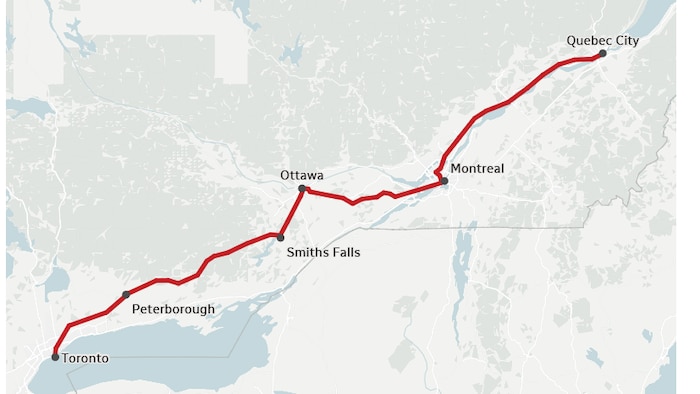
"Missing from the conversation, however, are municipalities along the westernmost stretch of the Quebec City–Windsor corridor, including London, one of Canada's fastest-growing cities. Expanding high-speed service into the region is possible, but requires a change in political and public will first, said Clarence Woudsma, a University of Waterloo professor specializing in transportation policy."
|
Getting a route through between London and Kitchener will be much more fraught with political difficulty. There are well organized (and funded) private movements in townships (including East Zorra and Wilmot) between the two cities that have a hardline anti-development conviction/cause, pushing a zero tolerance "absolute protection of farmland" cause to oppose several proposals there that are not agricultural. One is the initiative by regional government to assemble 700 acres in Wilmot for a potential future megafactory. This could well be response to recently announced developments such as the VW in St.Thomas and Honda in Aliston. The opposition there has been huge, even though such a facility would bring in uncounted millions of dollars in direct tax revenues, employ thousands, and have huge spin off benefits for the area. Instead, the protest groups want the land to remain as it is, bringing in minimal tax revenue (agricultural land is taxed lower), employ some dozens, and provide minimal spin off benefits to the large area. They want increased services, standard of living, etc., but they really just don't want any change to fund such things. In East Zorra, they chased a company proposing a wind turbine development out of town. Ironically, farm operations are heavily dependent on electricity, and consume ten times as much power as farming operations would have 20 or 30 years ago. They want more and more power, but aren't willing to be part of the solution to produce more of it. On the topic of resisting change, many of the residents at the council meetings supporting rejection of the wind farm proposal openly admitted that they really didn't want them because they were "ugly".
Attempting to run a high speed rail corridor through these areas will be a political nightmare compared to these two comparatively small examples I've outlined here.










 Linear Mode
