Canadian cities that should have been bigger than they actually are?


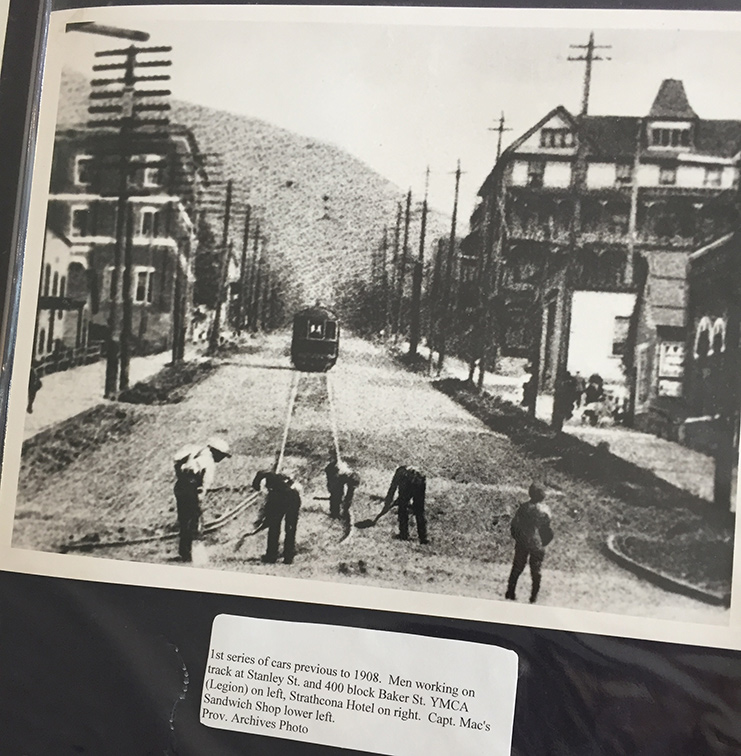
Not sure where it is now but I remember an old article discussing Saint John city council's plans around 1900. At the time, they were debating building a "subway", which referred to an underground tunnel that would have carried Birney cars. I think they were imagining something like the Tremont Street Subway built in Boston in the late 1800's. Some speculated that the city would have 500,000 inhabitants in the 1900's.

I think both Halifax and Saint John might have gotten some streetcar tunnels had they grown a bit more around that 1880-1920 period when that sort of infrastructure was built. But who knows if it would have been maintainable or useful in the postwar era. Halifax did get the "rail cut" in the 1910's; a trench was blasted in rock in the South End so the rail line could operate at a lower level with the surface streets running over bridges.

There's no Northwest Arm bridge in Halifax, but I'm sure something nice would have been built if the city had been just a little bigger around 1910-1960. Later in the postwar era there was a lot more opposition to projects like these. The rail cut would never have been built if it hadn't gotten done by the 1910's or so. I feel like that's a level of ambition and foresight in public works you don't see much today.
 
Winnipeg is the obvious example. It should realistically be a metro with a 2025 population of ~1.5 to 2.0 million serving a much larger agricultural region (province at ~2.5 to 3.0 million). Lots worked against it, from WW I ending the immigration boom, to the Panama Canal, to the Depression and WW II, to just general economic stagnation.

Stagnation happened to Winnipeg, but it can be argued that other places grew at the expense of Winnipeg.

I would say this is certainly true with Calgary (most of Winnipeg's regional head offices moved west with the rise of Calgary through the 80s and 90s, with all ripple effects that come with it).

Also some political interference with the moving of Air Canada's (TCA) head offices east, as well as some politicking with respect to other major aerospace contracts over the years.
 
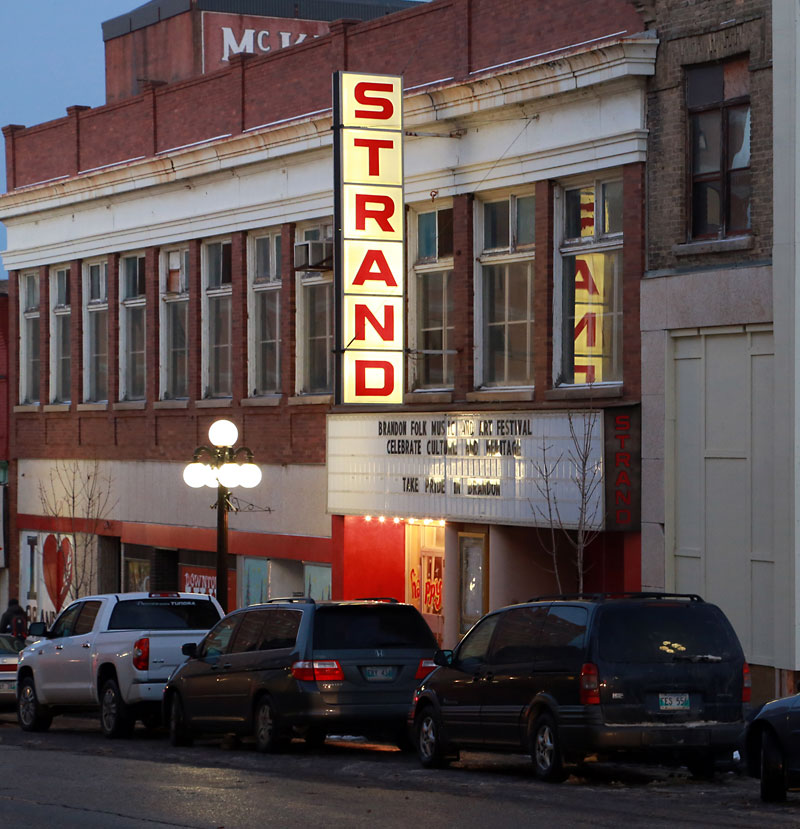
I remember going to see Titanic at the Strand in 1997 in Brandon. That street was gorgeous.

141126-raising-the-curtain-strand-b.jpg


https://www.brandonsun.com/local/2016/12/12/brandon-university-buys-strand-theatre

Now it looks like this:

https://maps.app.goo.gl/kbWWoPHz35TGHzM98
 
Winnipeg was once Western Canada's business capital, then overtaken by Calgary. Many Canadians don't realize how important Winnipeg once was. Walking around and seeing great commercial and residential building stock from the 1880s-1920s period, including some amazing apartment buildings you get a better of an idea.

Winnipeg was Canada's 9th largest city in the 1891 census. By 1911 it was the 3rd largest.

To me, this is one of the most fascinating Canadian Wikipedia articles
https://en.wikipedia.org/wiki/List_of_largest_Canadian_cities_by_census
 
Interestingly, Moose Jaw was also primed for glory. Its founders (the CPR board members back in Montreal) were banking on it to rival Winnipeg.
 
Moose Jaw is one of Canada's best smaller cities in my humble opinion.
Winnipeg stagnation seemed to be most prominent between 1991-2001 based on population numbers.

Since 2001, the city of Winnipeg has grown by almost 225,000, and CMA by over 270,000 according to 2024 Stat Can estimates. That's good growth numbers, particularly in the past decade.
 
What about Nelson, BC?

It had streetcars.

24sm.jpg


streetcar4.jpg


Two railways were constructed to pass through Nelson, positioning the town as a transportation and distribution hub. Due to its proximity to major transportation corridors, Nelson developed into a supply centre for local mining activities and soon became the region's primary transportation and distribution centre
 
I'd also throw in:
Thunder Bay
Sault Ste Marie
Prince Rupert

In the States, New Orleans for many years, the largest city in the South. Now it is dwarfed by Memphis, Nashville, Atlanta, Houston, Dallas, Miami, ....
 
London, Ontario (laid out before Toronto) was supposed to be the capital of Ontario, but it was just deemed too damned far from major population sources.

Back in the 60s, when they decided to start building Mirabel Airport, there was a thought that Montreal could end up with 8 million people not long after the millennium.

One factor that dampened Atlantic Canada was the intrusion of Maine. If the top half of that state had ended up in Canada, it would have provided a more direct line to the Canadian heartland.
 
One factor that dampened Atlantic Canada was the intrusion of Maine. If the top half of that state had ended up in Canada, it would have provided a more direct line to the Canadian heartland.

It's pretty rare for a country to have an region (not just a tiny area) separated by protrusions of another country like that.

This territory in between was contested and Britain occupied the Penobscot river in Maine (Bangor), controlling everything to the east during the War of 1812. And "Britain" in this case largely meant forces based in Halifax in the case of Maine, with Maritimers forming a portion of the troops and officers.

In those days Britain had a global empire and traded territory back and forth in treaties without caring much about the locals. That phenomenon was a cause of why Americans separated in the first place. New Englanders conquered Louisbourg then Britain gave it back to France in exchange for land elsewhere in the world. New Englanders ended up having to re-conquer Louisbourg (nominally "British" forces, but in large part actually New Englanders).

Another factor for Maine is that back in the 1800's the waterways were seen as important. Pre-railway-era observers would have considered the St. Lawrence the shortest path between Canada and the Maritimes, with the northern forests of Maine being irrelevant. The trade between the Maritimes and UK or US was also more important than the Maritimes and Canada in those days, so even just ending hostilities with New England would have been a higher priority than getting some forests in Maine.
 
I remember going to see Titanic at the Strand in 1997 in Brandon. That street was gorgeous. ...

Now it looks like this:

There are so many cities and towns in Canada that allowed demolition like this even though they're actually pretty healthy. Meanwhile the US has a lot of empty downtown areas that have been pretty well preserved and well maintained with beautification initiatives.

I get the feeling a lot of it was preventable and mostly in practice came down to leadership on town councils or a lack thereof, how well they worked with developers, etc.
 
I'd also throw in:
Thunder Bay
Sault Ste Marie
...

I find it fascinating that Sudbury has become the largest city/Metro in Northern Ontario. Being a "Great Lakes guy" it's hard for my brain to process :D The airport connections (1 hour flight) to Toronto and being a closer drive (4.5 hours) certainly helps.

2024 estimated population, city/CMA
Greater Sudbury - 186,337/191,902
Thunder Bay - 117,100/133,063
Sault Ste. Marie - 80,740
 
I remember going to see Titanic at the Strand in 1997 in Brandon. That street was gorgeous.

141126-raising-the-curtain-strand-b.jpg


https://www.brandonsun.com/local/2016/12/12/brandon-university-buys-strand-theatre

Now it looks like this:

https://maps.app.goo.gl/kbWWoPHz35TGHzM98


It doesn't have to stay like that! Someone with vision and money just needs to come along.
In an old industrial area of Buffalo known as The Hydraulics now renamed "Larkinville" after the Larkin Soap Co. HQ that used to exist down the street (massive LCo. building) they took a flattened parking lot that had been there for years (decades?) and built a mixed use building on top that fools the eye into thinking its multiple buildings with different facades. It looks like it's been there a lot longer than 4 or 5 years.

see below
 
Hamilton could be well over a million people by now, if not for proximity to Toronto. The city has consistently underperformed vs. population projections, I believe in a large part because of the Toronto CMA. It's only been more recently that growth has been fueled in part by former Toronto residents looking for a decently-priced home (which have become fewer and farther between in Hamilton)

As Hamilton lost industrial employment, it also lost head offices to Toronto and its suburbs. I think it would be more of a regional centre today, and not just for health care. In the 1960s there were unrealized plans for things like a subway system, predicated on the idea that post-war growth would continue.

The airport has certainly suffered from proximity to Pearson, but to go along with that there have been benefits for Hamilton residents being relatively close to such a major air hub.

Another downside would be a lack of integration with the GO network. But until 2WAD service happens, it's basically a feeder for employment in downtown Toronto, so there may have been benefits to Hamilton's growth if it were farther away, and had not become part of the Toronto commutershed.
 
We touched on the What If Maine was part of Canada above (and in a thread in the Atlantic Forum).

Another What If to consider is if the Maritimes had gone to the States. Historically there was a lot of North-South trade between the Maritimes (including Newfoundland; think of Great Big Sea's cover of "Boston and Saint John's) and the Eastern States. Had some butterlies flapped their wings and those provinces had become states in America, then Saint John, Halifax and St John's would likely have seen more consistent growth through the decades without the interruption in trade growth Confederation caused (due to Canada focusing on Upper/Lower Canada and tieing the country in an East-west trade pattern instead of North-South coastal trade patterns)
 
Halifax, St John's and Montreal for being around forever and their strategic ports.

Interesting you mentioned Nelson Molson.
They've been around for 130 years but are only 2000 more people larger than 45 year old Castlegar.
 
Saint John for me, although perhaps I'm thinking in term of cities I wish were bigger.

In that light if I could narrow it down to three, I'll throw in Nanaimo, and it has recent strong growth. Finally - Winnipeg. We need a big urban city between Alberta and Ontario and it has the foundation in place.

Winnipeg has a million people in the CMA, its not aome small backwater haha.
 
In the case of Saint John, New Brunswick: in the 1871 census it is Canada's fifth largest city. Portland, New Brunswick was Canada's ninth largest city.

Portland today is Saint John's north end— a neighbourhood so neglected you'd never know it was once a thriving city of its own.

As mentioned, confederation hurt the city badly.


Back
Top