Salt Lake City: Official Development News Thread - Part 5


Since we're on the topic of the lake, likely much to the dismay of some on this forum, there is one thing I'd really like to know. I'm not well educated on the topic of the lake, but my attitude amounts to doomerism. If the summer warming trend is the new normal (which seems to be the case), how is it possible to save the lake even if we cut our water usage to zero? We may be able to extend its life a few years but seems like eventually the accelerated evaporation rates will cause the GSL to become a perennial lake and there isn't much within reason we can do to prevent that eventuality.

Again, I'm not super educated on the topic and I'm not proposing we do nothing. I think water conservation is important no matter where you live. But for all the discussion about the lake I don't hear much about what I believe is the number one problem facing the lake: longer, hotter summers. If anyone has a source discussing this topic please enlighten me because I'd love to know more.
 
That was the sentiment I heard echoed by a Utah legislator on NPR this morning. I forget his name, but he basically said that pipelines shouldn't be off the table because, should we enter a prolonged drought, no amount of conservation would fix things. That being said, I am always suspicious of the legislature as they have their apparent motivations in things. While an endless drought would require water to come in from an external source, a pipeline would most likely extend the status quo without any real adjustments to the consumption side of things.
 
I am not as much of a doomer as this, but my reasoning fallows the same lines. I think there is allot we can do to conserve water. Alfalfa seems like a good place to start, but I don't believe you can ration or conserve your way to prosperity. At some point you have to increase capacity. Especially if the future of our snow pack is in question.
 
How about curbing development expanding out in the dessert like Eagle Mountain? How about limiting sprawl and thirsty green lawns?
 
All of these points are valid. I just don't see this is as an issue solved by only one solution. We need to conserve and rethink how we do agriculture, we need to discourage inefficient suburban sprawl, and there is also a very good chance we need to be creative and look to pipelines and engineering solutions as well. The good news is once we get more water into the lake, our lake effect should increase and bring more moisture, but we really are running out of time. The dryer it gets the harder it will be to fill back up.
 
How about curbing development expanding out in the dessert like Eagle Mountain? How about limiting sprawl and thirsty green lawns?

It's not residential development that's causing water shortages. It's agriculture. 82% of our water goes to agriculture. 6% goes to outdoor residential. 4% goes to indoor residential. Even if everyone in the state stopped watering their lawns, it would barely make an impact.

I'm not saying we shouldn't conserve, but our focus needs to stop being almost entirely on residential water use. Our focus needs to be on making agricultural water use much more efficient. That's the only thing that's going to have a significant impact on water conservation.
 
We can discuss it all we want, but there is already a formal plan. Problem is that Utah is terrible at following plans and will ignore this as long as possible.

Agriculture in the Great Salt Lake Watershed uses equivalent to the entire flow of the Bear River, pipelines are a silly idea as long as we use this much water for feed crops.
BGS5tQC.png
 
It's not residential development that's causing water shortages. It's agriculture. 82% of our water goes to agriculture. 6% goes to outdoor residential. 4% goes to indoor residential. Even if everyone in the state stopped watering their lawns, it would barely make an impact.

I'm not saying we shouldn't conserve, but our focus needs to stop being almost entirely on residential water use. Our focus needs to be on making agricultural water use much more efficient. That's the only thing that's going to have a significant impact on water conservation.

Exactly. People complain about about growth but when an alfalfa field is sold to developers and replaced with single-family homes with lawns, it actually results in a net reduction in overall water use.
 
It's not residential development that's causing water shortages. It's agriculture. 82% of our water goes to agriculture. 6% goes to outdoor residential. 4% goes to indoor residential. Even if everyone in the state stopped watering their lawns, it would barely make an impact.

I'm not saying we shouldn't conserve, but our focus needs to stop being almost entirely on residential water use. Our focus needs to be on making agricultural water use much more efficient. That's the only thing that's going to have a significant impact on water conservation.

I agree. I am obviously on the anti-sprawl bandwagon, but regarding agriculture, Utah just seems like the wrong place for extensive agriculture, especially alfalfa. They are having a huge problems with the Colorado River because of alfalfa farms. It's high time for those types of crops to be banned in certain arid climates.
 
Does anyone have thoughts on what will likely replace Hawthorne and Bennion elementary schools (assuming they don't just sit abandoned)?

Hawthorne is in a very interesting location. Could [the nimbys] get away with requiring very low density there and waiting for some single family home or townhome developer? It seems too large and prominent of a site for just a field of townhomes or cookie cutter single family homes. The sheer size of the lot automatically suggests 5-1 or something of that nature, but I can't imagine that ever being allowed there, so I fear a strip mall or a cookie cutter neighborhood like those in Murray and Millcreek.

Screenshot-at-Jan-23-19-17-27.png


Of course, they may not even sell it or develop it anyway. Not saying they should either - but I am curious what could realistically be built there if they do
 
I am not as much of a doomer as this, but my reasoning fallows the same lines. I think there is allot we can do to conserve water. Alfalfa seems like a good place to start, but I don't believe you can ration or conserve your way to prosperity. At some point you have to increase capacity. Especially if the future of our snow pack is in question.

Turn it into a National Park and let the Feds take over. The Utah legislature won't do anything bold. We need massive investment -- maybe billions and a pipeline will be the only long term solution to get it back 4200ft +. We're bound to have a few, very dry winters and just one more of those, we will easily be at a new record low and then everyone will panic again. The time to start some sort of pipeline was 10-years ago. Heck, we should just take the water from the Cottonwoods and pipe it under downtown and have it go directly to the lake.
 
Does anyone have thoughts on what will likely replace Hawthorne and Bennion elementary schools (assuming they don't just sit abandoned)?

Hawthorne is in a very interesting location. Could [the nimbys] get away with requiring very low density there and waiting for some single family home or townhome developer? It seems too large and prominent of a site for just a field of townhomes or cookie cutter single family homes. The sheer size of the lot automatically suggests 5-1 or something of that nature, but I can't imagine that ever being allowed there, so I fear a strip mall or a cookie cutter neighborhood like those in Murray and Millcreek.

Screenshot-at-Jan-23-19-17-27.png


Of course, they may not even sell it or develop it anyway. Not saying they should either - but I am curious what could realistically be built there if they do

I'm guessing the city will do everything they can to keep the old elementary schools as institutional or park uses. Both of the elementary schools they closed 20 years ago became alternative schools, and now that the old Rosslyn Heights building has been torn down, it's being turned into sports fields for Highland. I wouldn't bet on any of them being turned into residential development. If there's one that would seem most likely it would probably be Riley Elementary because it's such a huge property.
 
Does anyone have thoughts on what will likely replace Hawthorne and Bennion elementary schools (assuming they don't just sit abandoned)?

Hawthorne is in a very interesting location. Could [the nimbys] get away with requiring very low density there and waiting for some single family home or townhome developer? It seems too large and prominent of a site for just a field of townhomes or cookie cutter single family homes. The sheer size of the lot automatically suggests 5-1 or something of that nature, but I can't imagine that ever being allowed there, so I fear a strip mall or a cookie cutter neighborhood like those in Murray and Millcreek.

...

Of course, they may not even sell it or develop it anyway. Not saying they should either - but I am curious what could realistically be built there if they do

I'm guessing the city will do everything they can to keep the old elementary schools as institutional or park uses. Both of the elementary schools they closed 20 years ago became alternative schools, and now that the old Rosslyn Heights building has been torn down, it's being turned into sports fields for Highland. I wouldn't bet on any of them being turned into residential development. If there's one that would seem most likely it would probably be Riley Elementary because it's such a huge property. There was talk from one of the city councilmembers that that would be a good spot for a west-side high school, but I don't see why the district would invest in a new high school when they're already going to rebuild Highland and West and are having to close elementary schools. The high schools haven't seen the same declining enrollment numbers as elementary schools, but I'm not sure that trend will hold.

Since we're on the topic of the lake, likely much to the dismay of some on this forum, there is one thing I'd really like to know. I'm not well educated on the topic of the lake, but my attitude amounts to doomerism. If the summer warming trend is the new normal (which seems to be the case), how is it possible to save the lake even if we cut our water usage to zero? We may be able to extend its life a few years but seems like eventually the accelerated evaporation rates will cause the GSL to become a perennial lake and there isn't much within reason we can do to prevent that eventuality.

Again, I'm not super educated on the topic and I'm not proposing we do nothing. I think water conservation is important no matter where you live. But for all the discussion about the lake I don't hear much about what I believe is the number one problem facing the lake: longer, hotter summers. If anyone has a source discussing this topic please enlighten me because I'd love to know more.

I don't think evaporation takes all that much from the lake. As long as we're still getting winter snowfall, I wouldn't be worried about the lake drying up because of that in our lifetimes. There would likely still be enough water in the lake if we didn't divert so much for agriculture. Yeah, periodic drought would still make for lower lake levels, but I don't think hot summers would be the main cause of it, but rather dry or warm winters that limit snowpack. I am also not an expert though.
 
How about curbing development expanding out in the dessert like Eagle Mountain? How about limiting sprawl and thirsty green lawns?

Residential water usage is something like 13-15% of total water usage in the state... 85-87% comes from ranching/industrial. Of the 13-15%, around 60% of that is used for outdoor residential irrigation, so ~8% of all water usage, which isnt a lot.

I think Utah needs to focus on the largest water users... ranchers/farmers, given it's by far the lions share of all usage. A ton of evaporation is happening within antiquated ditches and canals that have been around for 175yrs+ that farmers/ranchers are using. I would imagine simply modernizing farming/ranching irrigation infrastructure could reduce evaporation equal to the total amount used for residential within the state.

Also, this may be a hot take, but Utah soil isnt great for farming, nor is the climate. The state should look to buy out many of these water rights cause if 13-15% can support 3.5MM people, extrapolating that out would say that we have enough water within the state to support 7x our current population at today's per capita usage rates, i.e. nearly 25 million people in total (and likely still be able to bring the GSL up the needed 7-8' of water to keep it in the "healthy" zone they're looking to do. )
 
Does anyone have thoughts on what will likely replace Hawthorne and Bennion elementary schools (assuming they don't just sit abandoned)?

Hawthorne is in a very interesting location. Could [the nimbys] get away with requiring very low density there and waiting for some single family home or townhome developer? It seems too large and prominent of a site for just a field of townhomes or cookie cutter single family homes. The sheer size of the lot automatically suggests 5-1 or something of that nature, but I can't imagine that ever being allowed there, so I fear a strip mall or a cookie cutter neighborhood like those in Murray and Millcreek.

Screenshot-at-Jan-23-19-17-27.png


Of course, they may not even sell it or develop it anyway. Not saying they should either - but I am curious what could realistically be built there if they do

That site is easily big enough to accommodate a moderate 5/1 or whatever on the 700 E side *and* a substantial townhouse development on the 1700 S-600 E-Milton Ave sides. We need more ownership opportunities and this is a perfect site for townhouses (except the 700 E side).
 
I assume they will keep the properties as well, but maybe with 4 schools + Judge closing around the same time there will be less demand for charter school/similar use spaces. Bennion is in a particularly valuable location

That site is easily big enough to accommodate a moderate 5/1 or whatever on the 700 E side *and* a substantial townhouse development on the 1700 S-600 E-Milton Ave sides. We need more ownership opportunities and this is a perfect site for townhouses (except the 700 E side).

I feel like the neighborhood would go crazy over anything there. Although it would be nice to see some mixed-use apartments fronting 700E and townhomes fronting the other streets. Maybe even a through street down the middle for more street-fronting townhomes

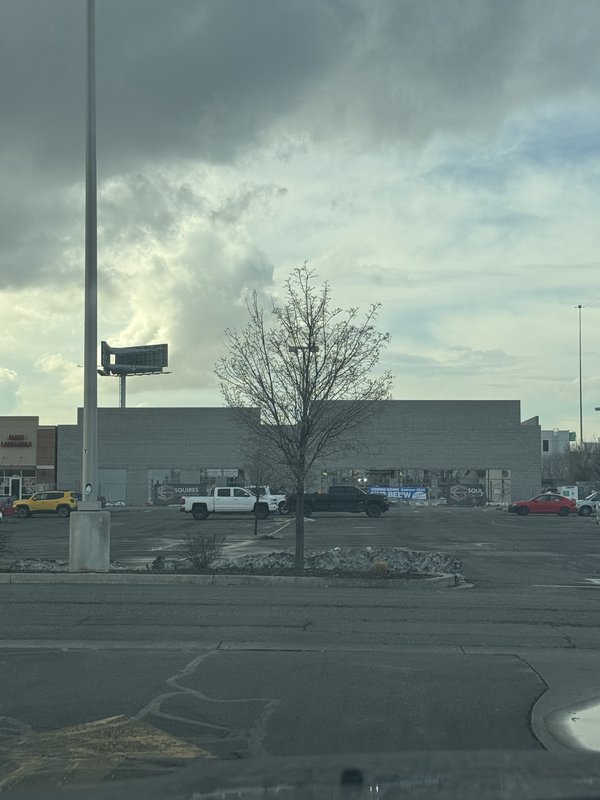
Unrelated, but it looks like a five below opening this summer is going up next to target on 3rd west. I think it's kinda disappointing but I swear this building went up overnight

IMG-6805.jpg
 
If there is a possibility that this new arena will take the Jazz away from SLC, I think there's a good case against the state being allowed to incentivize it. It is overtly, obviously going to hurt one city in favor of another.

"But Smith can build his entertainment district around a new arena" is not a good reason.

I’ve seen multiple interviews from yesterday where Ryan Smith says 1. The goal is to build a hockey-specific arena and 2. That the Delta center is one of the best arenas in the country particularly because of its seating slope for basketball. I don’t see the Delta Center getting demolished or the Jazz moving from it. That’s my take.


Back
Top