Quebec, the French Language, and Quebecois Identity


Status
Not open for further replies.
How old are you?

Old enough to recognize a foreign agent provocateur who has no business fomenting discontent and seditious commentary in a foreign country. You have no business posting In this thread. You are an obvious Anglophobe with nothing but contempt for Canada.

Go back to Smolensk where you belong.
 
First page starts with lots of fallacies. "French Canadians the only people in the world who enjoy democracy without having had to fight for it." Wrong. Ever heard of Japan for example? As for "before 1763 they had known only an authoritarian rule", what a stupid thing to say! 18th century France wasn't an "authoritarian" state! Sounds almost like what a conceited WASP from Boston would say.

The non-authoritarian absolute monarchy, a uniquely French confection.
 
The Leger poll that came out today does show a 6 point lead for the PQ over CAQ but no uptick in support for sovereignty. Quebecers merely want to oust a tired and crappy government. With QS banning men from running as party candidates now and the Liberals unable to even find someone wanting to be leader this is the only alternative they have.
 
PQ is ahead because they have a charismatic leader.. not like premier Eyebrows. The teachers strike isn't helping him either.
 
Sometimes, but in this case I have my doubts.

I do too, but remember I was only responding to your assertion:

Even if Atlantic Canada were to go through a rough patch, no one would dare play around in the US' backyard like that.

If it were to happen, then the logical conclusion would be that the US would seize control of what is now Atlantic Canada.

But, yeah, it's not gonna happen.
 
Old enough to recognize a foreign agent provocateur who has no business fomenting discontent and seditious commentary in a foreign country. You have no business posting In this thread. You are an obvious Anglophobe with nothing but contempt for Canada.

Go back to Smolensk where you belong.


Brisavoine isn't a Russian provocateur. He's just French.

u9GxqxZ.jpg


Their sympathies just tend to be odds with Anglo-Canadians (but when the roles are reversed, are really just the same).
 
Gas is cheaper in the States anyway. :)

I love Quebec, and Quebec City in particular. I've been around the entirety of the Gaspe coast, am familiar with the Chateauguay region, Lachute, the Outaouais, and the Estrie where my sister and brother-in-law lived and have a passing knowledge of la Mauricie. I have been to Montreal a number of times and went to Expo 67. It's not as if I have a chip on my shoulder about the province.

But, push come to shove, if you choose to divorce yourselves from my country with all the inherent disruption that would entail, especially to the Maritimes, then, well, you are my enemy. My enemy for life............

That's why I'm quite sure that a true separation will never happen. No separatist in Quebec wants Quebec to have hard borders with Ontario and NL. There is too much to lose on both sides but Quebec would hurt more.

Ontario currently allows huge amounts of unprocessed ore and logs to go to Quebec which gets the better jobs from it. That would immediately stop and a city like Rouyn-Noranda would suffer badly.
 
In my opinion for Canada to be as functional, cohesive, and stable as possible Québec must remain in the country.

Even if that means that Québec will do things its own way, even if that displease the ROC ? And even if Québec has a different set of (equally valid, whatever what some people might say) values that will not fit in well into the largely (supposedly...) accepted multiculturalism doctrine ?
 
I just don't see the ROC lasting very long after any separation, because the knives just go after the next target once the last one is excised. There's no way a United States watches a country disintegrate on its longest undefended border without some sort of involvement.

One of the unspoken function of Québec in Canada is to serve as a lightning rod to create diversions to deeper problems. If Québec wasn't there anymore to serve as a punching bag, people might start to realize that Ontario stranglehold on Canada is much deeper than previously thought. Now, when things are bad, we can just blame Ontario and Québec. Without Québec, Ontario will have to take toe full blame.
 
There is a key bit of missing context here in that all of the provinces (except Quebec of course) historically "stuck it" to their francophone populations, to the point where they are in most cases have been reduced to shadows of their former selves. (There are some exceptions like New Brunswick, but even there there are red lights on the dashboard.)

So even though all of the attention in the ROC is on Quebec being mean to its poor anglo minority, in Quebec people know the (far worse) history of francophones in other provinces so they're mostly unmoved by all of this crying.

And of course part of Quebec's resolve is all about avoiding what happened to the ROC's francophones, being done to them at some point in the future.

It's an interesting narrative that I can't quite wrap my head around. Have francophone populations been actively attacked in the 'ROC' (I'm not talking 1764 - which most people agree in today's world as being wrong, even though it was an act of war at the time), or has it been a natural progression of francophone communities blending in with the majority anglo communities surrounding them? Has the massive influence of the US through television and internet caused some of the language/culture bleed? It's not clear in my mind that anglo society has actively 'stuck it' to francophones, but it appears more to be an osmosis-type process.

Further, is it the government's responsibility to ensure that a language/culture continues untouched, in its original form? For example, should NS have protected the remaining Acadian communities by creating zones where English is not allowed to be spoken, in order to ensure that the Acadian culture continues?

I had the impression that French-speaking communities in NS (for example) were still retaining their language and were still very proud of their culture and heritage. I gather this from interactions I've had locally, plus I always see a lot of vehicles on the road with Acadian flag license plates on them (you're not getting a plate if you're not aware and proud of your heritage).

For those not aware:
ans-drivers-acadian-flag-licence-plate-sm.png


Service Nova Scotia, in partnership with Acadian Affairs, have developed a new French-language licence plate celebrating Acadian and francophone culture. The colourful licence plate features an image of the Acadian flag with the words Nova Scotia, Nouvelle-Écosse across the top.
Source

Of course you would have a vastly greater knowledge of Acadian communities than I would, but it's never been clear to me how to quantify the fact that communities change with time, and whether that's an indication that people are really losing something in terms of quality of life and happiness, or if it's more that the ideals of some members of the community don't line up with the direction that society is taking.

I always had the feeling that Quebec would always retain its francophone culture, whether the government propped it up or not. But also wondered if enforcing the use of the French language really made a difference for the average person, or if it just serves to satisfy the more activist members of the community. I felt that Quebec culture is very strong and unique (definitely not the same as France), and very (gasp!) Canadian. Maybe I was (am) wrong, though.
 
That's why I'm quite sure that a true separation will never happen. No separatist in Quebec wants Quebec to have hard borders with Ontario and NL. There is too much to lose on both sides but Quebec would hurt more.

Ontario currently allows huge amounts of unprocessed ore and logs to go to Quebec which gets the better jobs from it. That would immediately stop and a city like Rouyn-Noranda would suffer badly.

Assumptions, assumptions...
 
To be sure, Canada only exists because of the Francophone fact. Had there been no French Canadians, there would be no Canada, just a few more US states. It's doubtful the few British loyalists would have been able to resist US invasion in 1812.

On the other hand, if Québec seceded, I think Canada would continue to exist, out of "habitude" (la force de l'habitude), and also as a counter-reaction to losing a major part of itself. It would remain, like the Holy Roman Empire, even after it'd have lost its raison-d'être.
bg,f8f8f8-flat,750x,075,f-pad,750x1000,f8f8f8.jpg
 
:previous:

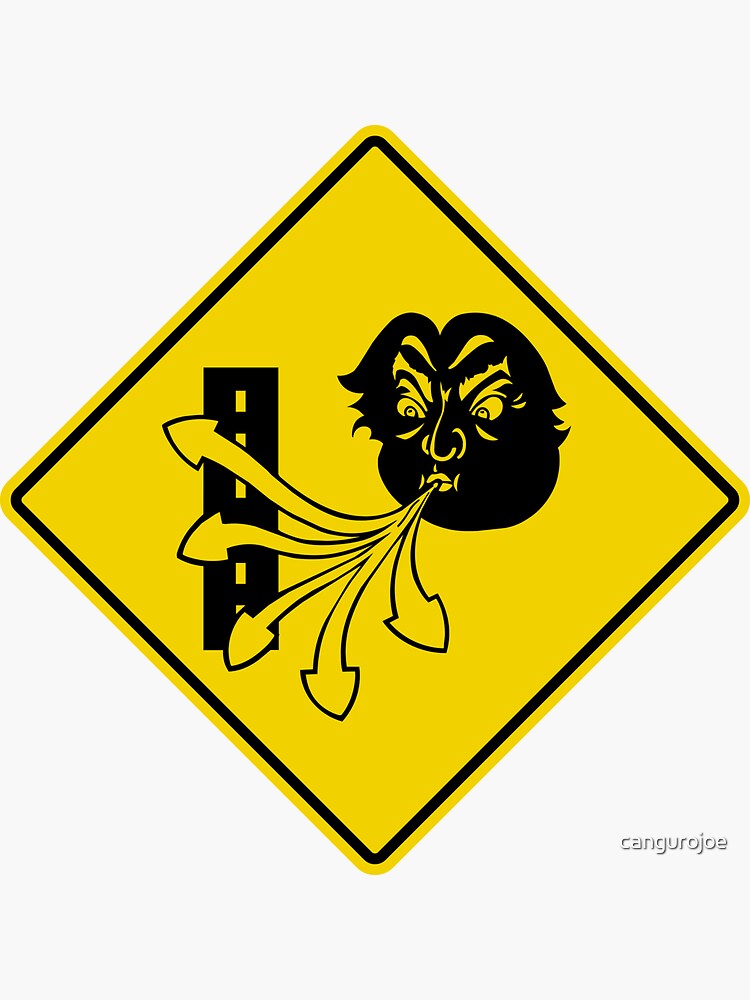
The pictograph on that sign looks like Donald Trump. Now there's a real blowhard for you!!! :haha:

Are you comparing New Brisavoine to the Trumpster??? Lets see - loud, obnoxious, intentionally provocative and speaks out of his ass.......... :rolleyes:

Yep, the resemblance is remarkable.......... :haha:

Wondering what the French equivalent might be? I might try "parler des conneries", but I've no idea if that is something one would say and, in any event, it's much less vivid.
 
It's an interesting narrative that I can't quite wrap my head around. Have francophone populations been actively attacked in the 'ROC' (I'm not talking 1764 - which most people agree in today's world as being wrong, even though it was an act of war at the time), or has it been a natural progression of francophone communities blending in with the majority anglo communities surrounding them? Has the massive influence of the US through television and internet caused some of the language/culture bleed? It's not clear in my mind that anglo society has actively 'stuck it' to francophones, but it appears more to be an osmosis-type process.

Further, is it the government's responsibility to ensure that a language/culture continues untouched, in its original form? For example, should NS have protected the remaining Acadian communities by creating zones where English is not allowed to be spoken, in order to ensure that the Acadian culture continues?

I had the impression that French-speaking communities in NS (for example) were still retaining their language and were still very proud of their culture and heritage. I gather this from interactions I've had locally, plus I always see a lot of vehicles on the road with Acadian flag license plates on them (you're not getting a plate if you're not aware and proud of your heritage).

For those not aware:
ans-drivers-acadian-flag-licence-plate-sm.png


Source

Of course you would have a vastly greater knowledge of Acadian communities than I would, but it's never been clear to me how to quantify the fact that communities change with time, and whether that's an indication that people are really losing something in terms of quality of life and happiness, or if it's more that the ideals of some members of the community don't line up with the direction that society is taking.

I always had the feeling that Quebec would always retain its francophone culture, whether the government propped it up or not. But also wondered if enforcing the use of the French language really made a difference for the average person, or if it just serves to satisfy the more activist members of the community. I felt that Quebec culture is very strong and unique (definitely not the same as France), and very (gasp!) Canadian. Maybe I was (am) wrong, though.

Well, for a personal example. One of my parents was born and raised Acadian in your province and during their schooling there was no teaching in French and the teachers were legally forbidden from speaking to the kids in French. AFAIK the kids were not forbidden from speaking to each other in French, at least not at the school my parent went to. I've heard it was the case elsewhere in Canada at one point (and also in the US like Maine and Louisiana) but my parent cannot validate that in their experience. But the ban on teaching French for many decades until roughly the 1980s of course severely affected multiple generations' skills in French to the point that many people's best language both written and spoken is English, and many have abandoned French altogether. Those few who went to good old Sainte-Anne in Church Point (previously a private high school, now a small university) generally ended up with better French skills.

In any part of Canada outside Quebec where francophones settled, they built their own schools, colleges, churches and even small hospitals. These institutions took root in the 1800s and the first parts of the 1900s, but in many instances they were at one point taken over by the provincial governments and switched over to English as their operating language. (Even in cases where the clientele remained entirely francophone.)

And BTW several of my relatives living in your province have those NOUVELLE-ÉCOSSE plates with the Acadian flag.
 
Wondering what the French equivalent might be? I might try "parler des conneries", but I've no idea if that is something one would say and, in any event, it's much less vivid.

More like "dire des conneries". "Parler des conneries" actually means "talking about inanities".

There are any number of idiomatic expressions in French equivalent to "dire des conneries" that evoke imagery, including "dire des âneries" which alludes to something a donkey would say.
 
AFAIK the kids were not forbidden from speaking to each other in French, at least not at the school my parent went to.

It is forbidden in the French school districts in NB to speak English anywhere on school property, even at recess. All parent teacher interactions and communications are in French only as well. This includes for any anglophone students attending these schools.

I know that these schools are intended for francophone students only, but some English speaking students do attend (blended families), and even some non blended families too. I know our anglophone mayor in Moncton (originally from southern Ontario with a unilingual English speaking surgeon husband) managed to get her son into the francophone school system.
 
Status
Not open for further replies.


Back
Top