Salt Lake City: Official Development News Thread - Part 5


There is a lot to like with the materials, incorporated elements of the cone and sign. There are also some terrible things. The way it interacts with Commonwealth looks brutal. The liquor is great on one corner but it is far too long without an active public use the rest of the way. That is way too much 2100 south frontage without active use. I would hope this design is changed.
 
A lot of complexes seem to be lining up for construction along 21st So. I guess that would also be a great alternative to being right on the S-Line. It will be interesting to see how 21st South and the S-line contributes to the continued buildup of the Sugar House node and the new South Salt Lake node.

I had heard from someone who used to be a tenant on the corner of 21st and 9th that all of 21st from 7th to 9th had been bought up and planned for housing. I’m guessing SH just gets more and more dense over the next five years.
 
So with all of this housing demand and construction, what are we anticipating for SLC's population in the 2020 census? 205k? 210k? 215k?

For context, the 2010 census has it at 186,440 and the 2019 estimate was 200,567 (from Wikipedia). It seems like the housing boom has been a relatively recent phenomenon in SLC proper, so I'm curious what the official numbers in 2020 will be.

Also, BSL just put out an article about the Station Center discussion from yesterday:
https://www.buildingsaltlake.com/ci...iming-to-make-a-splash-in-the-depot-district/
300s-aerial.png
 
So with all of this housing demand and construction, what are we anticipating for SLC's population in the 2020 census? 205k? 210k? 215k?

For context, the 2010 census has it at 186,440 and the 2019 estimate was 200,567 (from Wikipedia). It seems like the housing boom has been a relatively recent phenomenon in SLC proper, so I'm curious what the official numbers in 2020 will be.

I think that the estimates have been off for the last 10 years. I think it was 2016 or 2017 that had SLC losing population. It was only around 500 or so but I just don't think that was correct with the massive amount of apartments that have been added.

SLC has had a vacancy rate of less than 5% for apartments over most of the decade even after adding so many units.

I think that SLC will be around 210K. I could see it going higher but no higher than 220K. I don't see the number coming in less than 205K though.

This topic has had me doing some digging to try to figure out what the official number would be.

According to estimates, SLC gained 4,400 new residents between 2010 and 2014. It also estimated that SLC would be at roughly 220K by 2030.

Between 2014 and 2017 SLC had issued permits for 5,912 apartments

In 2018, it was estimated that Downtown would roughly double the number of number of housing units going from 5,200 to around 10,000

For 2018 to 2019, SLC had 3,845 multifamily units permitted to be built in 2019 an increase of 476% over its previous 814 units in 2018.

All told, I think there has been roughly 10,000 units built since 2014. Using the estimate of 2.1 people per apartment, this would be 21,000 people added since 2014. With an estimate of 190K at 2014, adding 21,000 people would put SLC over 210K.

What is amazing though, in looking back, the last 4 years have seen dramatic increases in permits for housing in the City. The growth has increased every year and projects are coming faster than ever before.

The part that should stand out is that all this growth is due to increasing density rather than sprawl.

As the trend looks to continue, I think the 2030 population may exceed 235K. It is also possible that the downtown units could push closer to 20,000 by 2030. This would be roughly doubling again from the estimated 2020 number.
 
The question then is how many people have grown up and moved out of their parent's house, not being able to stay in Salt Lake because it's so expensive? Have families with 3-5 or more people wholesale moved out? I think 200k is too low, but you can't just take the apartments and add that number, because it could be offset at least to some extent by people moving out of already existing housing - and some of those apartments are surely occupied by people who are just moving from other areas of the city. I hope it's 210k, but I wouldn't be surprised if it's closer to 205k. So 205k is my estimate.
 
Anyone wish SLC would just annex the pointless cities of North Salt Lake, South Salt Lake, and Millcreek? That would put them over 300k real quick. I feel like the population numbers for SLC have been misleading for quite some time, and both the city and metro numbers make people think we are a much smaller city than we are. Truth is we are the center of a 2.6 million metro area, it makes no sense for Provo and Ogden to be separate areas, there is no break in contiguous urban development in the corridor any longer. Fixing this and annexing those 3 cities would make us look far bigger on paper without actually changing much of anything.
 
Anyone wish SLC would just annex the pointless cities of North Salt Lake, South Salt Lake, and Millcreek? That would put them over 300k real quick. I feel like the population numbers for SLC have been misleading for quite some time, and both the city and metro numbers make people think we are a much smaller city than we are. Truth is we are the center of a 2.6 million metro area, it makes no sense for Provo and Ogden to be separate areas, there is no break in contiguous urban development in the corridor any longer. Fixing this and annexing those 3 cities would make us look far bigger on paper without actually changing much of anything.

I agree. :tup:
 
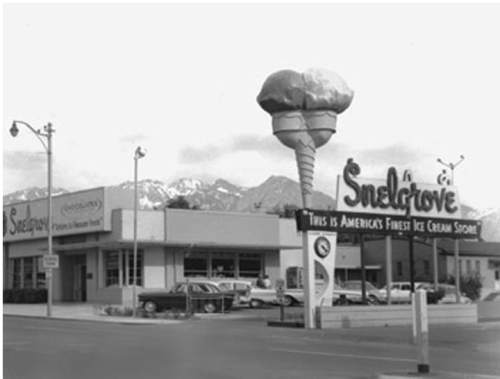
Love the bad grammar/tacky slogan “This is America’s finest apartments.” Lol

A bit odd to emulate the Snelgrove slogan,
typeface and clock on the 2100 South side but put the iconic doubledip cone on the less visible Commonwealth side...but I am glad they have these references to SLC history.
 
Anyone wish SLC would just annex the pointless cities of North Salt Lake, South Salt Lake, and Millcreek? That would put them over 300k real quick. I feel like the population numbers for SLC have been misleading for quite some time, and both the city and metro numbers make people think we are a much smaller city than we are. Truth is we are the center of a 2.6 million metro area, it makes no sense for Provo and Ogden to be separate areas, there is no break in contiguous urban development in the corridor any longer. Fixing this and annexing those 3 cities would make us look far bigger on paper without actually changing much of anything.

Bingo. We've been arguing for this on this forum for some time alas the cat is out of the bag. All of that anexing stuff should have been done in the 80s but our leaders were asleep at the wheel. No chance in hell those mumis would allows absorbtion into our city for so many reasons. But Goved should be pushing to unify the three metros of our CSA into an MSA. It skews all of our stats, effect corporate recruiting and acement and consulting etc. Really hurst us.
 
1700 South Apartments

I noticed a Commercial Building Permit has been filed for a project I was entirely unaware of called '1700 South Apartments.' There was no link included in the filing, so I unfortunately can't link it, but you can see it below:

xgFtJKg.jpg


I used the county assessor map (above) to identify the parcels that appear to be part of the new 237 unit development. The total land area is a little over 3 acres, which sounds about right.

After a google search, the only thing I could find related to a project called 1700 South Apartments was this October letter from the Utah Housing Corp:
https://utahhousingcorp.org/pdf/agenda201021.pdf

pWp6ozT.jpg


According to Utah Housing Corp's Website:
https://utahhousingcorp.org/about

Utah Housing Corporation (UHC) was created in 1975 by Utah legislation to serve a public purpose in creating an adequate supply of money with which mortgage loans at reasonable interest rates could be made to help provide affordable housing for low and moderate income persons.

So it appears this 5 floor and 237 residential unit project is, at least in part, an affordable housing project.

Hopefully we will get more details and renderings on it soon.
 
This is potentially unsubstantiated but I heard that Salt Development (the ones that did Hardware Village and 4th West) is involved in a multifamily project just south of Trolley Square. Not sure if this is the same project that we have seen renderings for long ago.

Has anyone substantiated this yet? I keep wondering what the Status is with that Trolley Sq. So. development. If Salt is involved, that is a very good sign.
 
Anyone know what the latest is on the Zephyr? Any activity at the site?

Downtown Update - The Zephyr Lofts - Downtown warehouse district continues its transformation​


Luke Garrott Reports - Full Article @
https://www.buildingsaltlake.com/do...ormation-with-zephyr-lofts-mixed-use-project/


Zephyr-SE-street-view-scaled.jpg

The Zephyr Lofts, 360 W. 200 S. in west Downtown, Salt Lake City. Rendering by VCBO Architects, courtesy Clearwater Homes.​

Clearwater Homes of Utah and Watt Investment Partners of Santa Monica, CA, will start construction in late summer on a 138-unit market-rate apartment project at 360 West 200 South in the heart of Salt Lake City’s warehouse district.

The project aspires to be “iconic, remarkable, and aesthetically enduring” – “a source of pride for the local community” according to the local developer, Clearwater’s Micah Peters.

Peters has developed Paragon Station on the same block, and also is under construction with the Paperbox project with PEG Development just behind the Zephyr Lofts site...

...The name “is homage to the depot district and the historic Zephyr engine/line that steamed into Salt Lake City on the Union Pacific rails,” Developer Micah Peters told Building Salt Lake.

Infilling surface parking lots between the historic Westgate Lofts on the east and the Dakota Lofts on the West, The Zephyr will rise eight stories to 85 ft. Sitting on D-4 zoning, the developers have entered the design review process in order
to exceed the zone’s nominal 75 ft height maximum.

The Zephyr’s 138 units will be a combination of 70 studio, 55 one-bedroom, and 13 two-bedroom apartments.

It’ll be parked at a 1:1 ratio (140 stalls), with the upper floor of the podium parking incorporating 3 car city parking stackers.

Street frontage will consist of gyms, a leasing office, and a small bar/restaurant space. Clearwater’s Peters says he’s in conversations with a local artisan operator that has several food + beverage businesses in the neighborhood. The retail
space offers 1800 sf and a 20-seat outdoor patio.

It will provide a public walkway from 200 South to the midblock right-of-way that skirts the Paperbox development.


Zephyr-sidewalk-SE-scaled.jpg

The Zephyr Lofts, 360 W. 200 S. in west Downtown, Salt Lake City. Rendering by VCBO Architects, courtesy Clearwater Homes.

Pool-View-Night-Rendering-scaled.jpg

The Zephyr Lofts, 360 W. 200 S. in west Downtown, Salt Lake City. Rendering by VCBO Architects, courtesy Clearwater Homes.​

Zephyr_2.jpg


.
 
I am glad they're keeping the history of Snelgrove double scoops & the old sign, even if the proposed building is a hulking mess.

Also feel The Zephyr Lofts would be more fitting at the location of the actual Zephyr Club but that's just me.
 
^^^
There was a post that it was about to begin, and then a post a few days later that it hadn't begun yet. I hope it's any day now. Sugar Alley is one of my favorites.


Is COVID-19 the ‘great accelerator’? Utah set to win big as big cities continue to lose residents

https://www.deseret.com/utah/2020/1...n-family-friendly-san-francisco-new-york-city

Utah could be perfectly positioned to become one of the top destinations for those fleeing urban residential settings that have become, for some, considerably less desirable amid the current public health crisis.

Two national experts on urban development, Joel Kotkin, presidential fellow in urban futures at Chapman University, and Wendell Cox, senior fellow at the Urban Reform Institute, presented research and insight last week during an online discussion hosted by the University of Utah’s Kem C. Gardner Policy Institute.
 
Last edited:


Back
Top