
You are using an out of date browser. It may not display this or other websites correctly.
You should upgrade or use an alternative browser.
You should upgrade or use an alternative browser.
Salt Lake City: Official Development News Thread - Part 5
- Thread starter jubguy3
- Start date


Always Sunny in SLC
New member
Clearly there is something that picture of 665 is not showing because that home is a dump and does not look like it should be saved. The big question is whether that is purchased and remodeled or just continues to sit becoming more dumpy.

bob rulz
Active member
I'm more bothered with the usage of the term "mixed-use". Calling a 5-building development that has 4 all-residential buildings and another building that's part residential, part hotel mixed-use is really stretching the definition of the term. Can we not get ANY ground-floor retail in that development? It doesn't need a lot, but even 2 or 3 storefronts would be better than nothing.
Unless I'm misreading something.
Unless I'm misreading something.

delts145
Active member
Downtown Adj. - Western edge of North Temple still rising
Isaac Riddle Reports - Full Article @ https://www.buildingsaltlake.com/pictures-west-north-temple-still-rising/
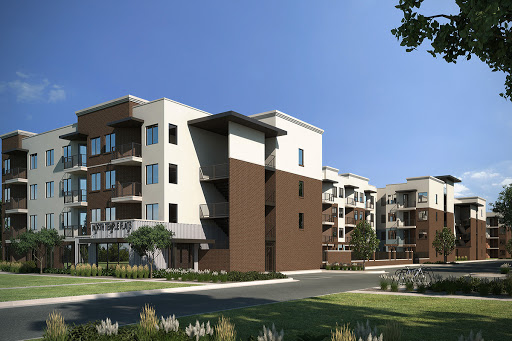
The housing cluster around North Temple and Redwood Road continues to build up. Three projects with 581 total units are currently under construction, the North Temple Flats, The Meridian and West Station Apartments Phase Two.
North Temple Flats
The North Temple Flats run along I-215 just south of West North Temple and is framed up to the second level. The project is being developed by the Summit Housing Group, a Montana based company that specializes in low-income tax credit developments. This SLC Housing Trust Fund project consists of 168 units, 98 of which are income restricted and the rest are market rate. Designed by Architecture Belgique, it replaces a motel and a small mobile home community.
https://lh3.googleusercontent.com/

Looking south across North Temple at the North Temple Flats. Photo by Mike Fife.
The Meridian
The Meridian (formerly referred to as the Orange Street Apartments) are on the south side of North Temple just south of Sutherland’s Lumber and west of Redwood Road. Developed by Lake Union Partners of Seattle, this market rate project will have 265 units

http://www.utahprojects.info/

The northwest corner of The Meridian apartments looking southeast across North Temple. Photo by Mike Fife.
West Station Apartments, Phase II
The West Station Apartments Phase Two is just northeast of Sutherland’s Lumber along Redwood Road.
Phase Two will be aesthetically identical to Phase One and will feature an additional 148 units to Phase One’s 145.

Completed Phase I, http://www.weststationapartments.com/

Phase Two of the West Station Apartments as seen from Phase One. Photo by Mike Fife.

The east side of the West Station Apartments Phase II along Redwood Road, just a block north of North Temple. Photo by Mike Fife.
.

Old&New
New member
There is no more efficient way to destroy a landscape than to designate it a "National Parking Area". No national parks here. Please.
How about designating a landscape as a strip mine... wouldn’t that be more efficient with all that earth moving equipment?
Last edited:

ajiuO
A.K.A. Vigo
Neither of thoes houses look particularly special... that second one just needs to go in the trash though. Seriously? I really hope the city is not paying for that. I also don’t think they should make Trolly Square Pay to move that house. It looks like somthing that was built in the 1950’s and has no character worth preserving.
HLC approved three missing middle projects last week. One is mixed-use (with actual ground floor retail) and includes a rehab of a historic duplex.

With the haze from the inversion, I have always wondered, at what height would a building break through?
I know it varies based on ground elevation but I have wondered if a 500' or maybe a 600' would break through. I like to imagine the thought of images showing the buildings breaking through the haze as well as images from inside the buildings looking down upon the clouds.
I know it varies based on ground elevation but I have wondered if a 500' or maybe a 600' would break through. I like to imagine the thought of images showing the buildings breaking through the haze as well as images from inside the buildings looking down upon the clouds.
With the haze from the inversion, I have always wondered, at what height would a building break through?
I know it varies based on ground elevation but I have wondered if a 500' or maybe a 600' would break through. I like to imagine the thought of images showing the buildings breaking through the haze as well as images from inside the buildings looking down upon the clouds.
Probably around 5,500ft in elevation or maybe a little more with this inversion
FullCircle
New member
Van Cott, behind the UofU medical campus, is around 6300 feet. On top of it you generally get sun even in bad inversions, but it sort of depends on how tight of a gradient the temperature inversion has set up. I've been up there during an inversion where you can't see the valley, but you can see the Oquirrh's through a thinner haze, and the sky is relatively blue. I've also been up there when I'm completely above the haze and the valley is socked in. Mt. Wire, at 7100 feet is almost always up in the clear. Downtown is around 4300 feet, so it would take a 2000ft tower to match Van Cott, which would pretty well do it. A 1000 ft tower would get you out of some inversions but not others. Almost always though, the lower you get the worse it gets, so the taller the better, in that regard.
On a somewhat related topic. I’m a bit of a weather nerd and I’ve also wanted a taller tower with a rooftop like the Utah One center that would have snow on it when the valley didn’t. I’ve thought that would be cool to enter the building in the rain and have a residence at the top, or an office that was in the snow.
Do any of you fellas have a contact or someone that could shed some light on the CCH status? Make a few phone calls so we can stir up some sort of discussion. 2018 is looking pretty promising though. If some of the big projects get going that will really be a good sign.
Do any of you fellas have a contact or someone that could shed some light on the CCH status? Make a few phone calls so we can stir up some sort of discussion. 2018 is looking pretty promising though. If some of the big projects get going that will really be a good sign.
ajiuO
A.K.A. Vigo
Do any of you fellas have a contact or someone that could shed some light on the CCH status? Make a few phone calls so we can stir up some sort of discussion. 2018 is looking pretty promising though. If some of the big projects get going that will really be a good sign.
I found this post from Oct, 19th 2006. It describes the current status of the CCH perfectly... Basically we’ve been talking about it for 11 years. And the fact that we’ve been talking about it is all there is to know.
delts145 said:Note: This article was written as a synopsis of a very successful 2005 season. While 2006 is not complete yet it is showing significant gains over 2005 thus far.
The next post will show a couple examples of month's in 2006. Hopefully this is an indicator of those big flagship,Very Tall,hotel towers,that we all dream about being built soon downtown!!!!
As occupancy rates rise, analysts see need for big project in downtown S.L.
By Dave Anderton
Deseret Morning News
A killer virus, the war in Iraq and terrorist attacks once jolted confidence in U.S. travel safety. Now, a strong economic recovery and fond memories of 2002's Salt Lake Olympic glory are erasing old fears and boosting Utah's hotel industry. In fact, Salt Lake's hotel rooms are filling up fast.
In 2005, the city's overall occupancy rate climbed to 69.1 percent, up from 62.9 percent in 2004, according to the Rocky Mountain Lodging Report, which tracks hotel trends in Utah, Colorado, Wyoming and New Mexico.
The 2005 rate is approaching those of the 1990s, when occupancy rates for the city floated in the mid-70 percent range. In 1994, Salt Lake's occupancy rate climbed to 80.1 percent, its highest ever, according to Robert Benton, sponsor of the lodging report.
"You are at an occupancy level where developers are going to start looking at the market and start looking at new projects and planning for new projects," Benton said. "Occupancies in Salt Lake have been improving since the 1999-2000 period. The market is not overbuilt."
Occupancy rates between 70 percent and 75 percent are considered good for a typical hotel, Benton said. Rates surpassing 80 percent indicate an establishment can raise room rates.
Salt Lake's occupancy rate in 2005 outperformed Albuquerque, which ended the year at 64.8 percent, and Denver at 64.1 percent, the lodging report said.
In addition to higher occupancies, average room rates for Salt Lake City also increased in 2005 to $76.85, up from $75.71 a year earlier.
"People remember Salt Lake City, but you've also had good snow. You had a record number of skier days last year," Benton said. "Commercial travelers are coming back. Now you've got group business coming back. The leisure market is coming back."
Steve Lindburg, general manager of the Hilton Salt Lake City Center and past president of the Utah Hotel and Lodging Association, said Salt Lake's hotel industry is healthy and growing.
"We became overbuilt just before the Olympic Games," Lindburg said. "In the years since then, we're starting to see a good balancing point. I think what we are going to see is demand is going to keep creeping up as long as the economy keeps going."
Lindburg said he considers an occupancy rate less than 65 percent a "bad" rate. The 499-room Hilton is currently running at a 72 percent occupancy rate, Lindburg said. Its average room rate was up 11 percent in 2005 compared to 2004.
"What we are seeing now is the average rate people pay for a room is actually growing pretty significantly," Lindburg said. "I think we are seeing positive demand growth as we move into 2006 and beyond.
"The business traveler is definitely back in a big way, and now what we are starting to see is the leisure traveler is starting to come back. I think what we are going to see is more folks getting out for long weekends."
Steve Lindburg is general manager of the Hilton Salt Lake City Center. Bobby Bowers, vice president of marketing for Smith Travel Research, said the national hotel occupancy rate in 2005 was 63.1 percent, up from 61.3 percent in 2004. Room rates across the country rose to an average of $90.84, up 5.3 percent from the previous year.
Bowers attributes the higher national occupancy rate to fewer hotels built over the past couple years. In 2005, the number of U.S. hotel rooms grew by only 0.4 percent.
"Historically, that's about as low as it gets," Bowers said. "In the Salt Lake-Ogden area, the room supply in the past three years has actually been down a little bit, which means that there may have been some hotels that have been taken out of inventory, leaving supply down."
And with The Inn at Temple Square expected to be razed to make way for a new downtown mixed-use development, as well as the partial conversion of the Salt Lake Plaza Hotel, 122 W. South Temple, to housing for LDS Business College students, hotel occupancy rates could be pushed even higher.
"It wouldn't surprise me if somebody comes in, with the development over near Temple Square," Lindburg said. "There might be room for a hotel development near the LDS Church development."
Mark White, vice president of convention sales for the Salt Lake Convention & Visitors Bureau, is hoping a large-scale hotel is soon built adjacent to the Salt Palace Convention Center.
Note: Context, with photo insert of Mark White,
The Grand America, with 775 rooms, is a little too far away from the Salt Palace Convention Center to serve as the headquarters hotel. "One of the big concerns expressed by convention planners is Salt Lake's lack of a headquarters hotel," White said. "We're talking about a property that's got to be in the 800- to 1,000-room range. Denver, our No. 1 competitor, has just opened up their 1,100-room Hyatt, which is directly across the street from their convention center."
Salt Lake's Grand America, with 775 rooms, is a little too far away from the convention center, White said. A Marriott hotel, located just east of the convention center with 515 rooms, as well as the nearby Hilton, act as the headquarters hotels for convention business.
But even those are not enough when Salt Lake's biggest conventions come to town.
Two dozen hotels accommodate the Outdoor Retailer winter show, which has attracted about 18,000 people to Salt Lake City this week.
"That's part of the reason that some of these giant hotels in Las Vegas have been so successful," White said. "They can put literally thousands of people in one hotel."
White believes the addition of a 1,000-room hotel would not drag down Salt Lake's hotel room rates or occupancies but instead would attract more business.
The addition of smaller hotels, with 40 to 100 rooms, White said, does not enhance Salt Lake City's attractiveness as a convention destination.
"Typically, those smaller hotels pull occupancy away from the big hotels," White said. "If a 1,000-room hotel were to be constructed, we're talking about a three-year period at least to get that thing built. So it would give us that long to start pre-selling it."
According to Smith Travel Research, hotel rooms in the Salt Lake-Ogden region declined to 19,276 rooms in December 2005, down from 19,347 rooms in December 2004. At present, there are two hotels under construction in the region that will add 256 rooms to the market.


