
Lobotomizer
Frontal Lobe Technician
It's time for North Campus to get the same treatment as West Campus. Up to about 38th Street should be rezoned to allow some serious height and density.

The West Campus area of Austin — where most University of Texas students live although it's almost all privately owned — has seen a huge wave of development over the last two decades, and soon even more skyscraping towers could be built there.
City planners are crafting a new long-term plan for the area that could change the rules for developers.
In 2004, Austin created the University Neighborhood Overlay district, which allows for denser development in the West Campus area to increase supply of residential units and make it easier for UT students to find an affordable place to live. The creation of the UNO has spurred significant growth in West Campus, as Austin estimates the area’s population has grown beyond 28,000 residents and created at least 972 income-restricted bedrooms.
There are multiple 30-story towers built under the UNO. Those include the Waterloo Tower, which was developed by the LV Collective; the Union on San Antonio, developed by Greystar Real Estate Partners; and Icon at Austin, which was created by MDL Development.
NEW MEMBER PERK: PORTFOLIO
Curated Benefits from Premium Brands
Enjoy exclusive discounts on business services, travel, and everyday essentials with Portfolio.
ACCESS MY SAVINGS
WestCampus 013expand
West Campus, seen here in the foreground with UT and downtown in the background, is one of the few niches in Austin where developers can go sky high.
Dave Creaney
Christopher Kott, the chief investment officer for LV Collective, said West Campus has drawn so much development because apartments in the area have consistently strong performance and usually have strong occupancy rates. He also said the UNO regulations have been a success for developers and people wanting to live in West Campus.
“(UNO) is one of the most successful districts that we believe in the entire country in terms of both affordability, density for student housing, and creating community outside of just housing,” Kott said. “With UT not having a freshman live-on requirement, being close to almost 54,000 students with less than 8,000 on-campus beds, it's extremely important that you have densification of that kind of corridor for students to get to.”
The city of Austin could soon update the regulations for UNO and West Campus. The effort would put in place better standards for residents in the area and possibly allow even denser projects. The city of Austin is in the process of creating the Central City District Plan, which would establish a new long-term planning and guiding vision for the future growth of Austin’s urban core.
Austin formally kicked off the effort to create the Central City District Plan last December and has spent 2026 gathering feedback and working to create the plan. A city-run website said the Central City District Plan could be approved by the Austin City Council sometime in the spring of 2027.
Austin City Council Member Zohaib “Zo” Qadri knows well the challenges that come with living in West Campus, as his council district covers the area and he used to live there. Qadri said he is supportive of the development taking place in West Campus in recent years but acknowledges there are improvements needed in building and property management regulations for West Campus, especially when compared to other parts of Austin.
Qadri said he hopes the Central City District Plan will result in something that encourages more growth in West Campus and the rest of Austin's urban core.
“I think we should embrace growth,” Qadri said. “I think it's the people that make Austin the special weird city that it is, and I think we should continue to be a welcoming city and not just say, 'Hey, we're at capacity; we don't need anything else.'”
More density coming to West Campus
There is more density planned for the West Campus area as a 300-foot tower site plan was filed for a 0.5-acre lot on West 22nd Street. At least one developer is interested in building a roughly 400-foot tower in the area, which would require a new maximum building heights there. Kott also said LV Collective controls another site at 504 W. 24th St. in West Campus that will be another student-housing-focused product.
Qadri said that new development in West Campus could support students wanting to live in the area as well as non-students that want to live near downtown. He notes that West Campus has a healthy amount of non-student, year-round residents.
The LV Collective believes not all parts of West Campus are well suited for tall, dense towers. Kott thinks the best place to add density in West Campus is the area between Rio Grande and Guadalupe Streets.
WestCampus 004expand
Plenty of traditional housing can be found in West Campus — but not as much as their used to be.
Dave Creaney
Alan Ware, a real estate investor who also runs property management companies for West Campus area apartments, said there aren’t any easy opportunities to add new housing and projects to West Campus.
“You used to be able to tear down six houses and put in 100 apartments,” he said. “I think those opportunities are gone."
Kott agreed that it’s getting more difficult to find workable projects in West Campus. But he added that if the area was able to add more diverse types of real estate uses, like grocery stores, hotels and retail, West Campus could see even more interest from developers.
“We think more broadly there, and that there needs to be alternative uses outside of just housing … that brings that area to a 12-month, year-round operational area and continues to support the broader community of Austin,” Kott said.
Changes on the planning front
The areas of Austin that will be part of the new Central City District Plan include UT’s main campus, the West Campus area, downtown Austin and the South Central Waterfront area. Austin’s SpeakUp webpage on the Central City District Plan said this effort would improve how Austin deploys its resources and plans capital projects that would impact the area.
In 2025, the city of Austin also contemplated a proposal to update the planning and building height regulations for the UNO district that covers West Campus. That 2025 proposal could’ve increased the maximum heights for buildings in the UNO from 90-foot maximums to 600 feet, depending on the building's location. Currently, the maximum heights for UNO range from 50 feet to 300 feet.
The effort to update the UNO regulations was kicked off in April 2024 when the Austin City Council passed a resolution calling on city staff to update the area’s building regulations.
Austin ultimately tabled its efforts in 2025 so the city could better collaborate with UT officials over the planning efforts. After tabling the 2025 UNO updates, Austin rolled those efforts into the creation of the Central City District Plan.
Qadri said he didn't like that UT wasn’t more collaborative in the past about updating UNO because he thinks those updates need to be done sooner rather than later for the area to be improved.
“I'm a big proponent of the UNO update,” he said. “As a proud alum, I'm disappointed in UT kind of being a roadblock to a lot of that progress. My hope is that we're able to get it through. I think it benefits students. I think it's, you know, you look at the quality of life improving."
WestCampus 014expand
An aerial view of West Campus.
Dave Creaney
UT officials have mostly kept quiet about what future development they’d like to see in the West Campus area. The university didn’t respond to requests for comments for this story.
Ware said he thinks the UNO regulations have resulted in a great amount of supply being delivered to the West Campus area and have helped temper rent growth for the area.
“The new supply really has helped,” Ware said. “I can't imagine what West Campus would look like if they had not passed UNO; it would just be a huge shortage of opportunities for students.”
But projects built under the UNO regulations aren’t perfect, as at one point these rules allowed for buildings to have buried beds, which are bedrooms that don’t have windows. In 2023, Austin moved to explicitly ban buried beds. Many UT students over the years have also complained about the living conditions of West Campus buildings and say their overall maintenance can be better.
“I had freezing water the entire first semester, and then it was burning hot the second semester,” said Lucia Olaechea, a former West Campus resident.
UT officials are making long-term planning efforts of their own. The university is actively creating a new master plan that will guide UT’s growth for up to 25 years. UT started the effort to create a new master plan earlier this year, and it will likely be completed sometime in 2027.
Brent Stringfellow, UT’s associate vice president for campus operations and planning, previously told the Austin Business Journal that part of the new master planning effort is accounting for Austin becoming a denser and more urban city.
Improving access is important for West Campus
Kott also said West Campus could be improved if it’s easier for residents in the area to access other parts of the city. That could make the area more appealing for non-students.
There is a major effort ongoing to improve access to West Campus.
The West Campus area could see a great amount of change from the planned 9.8-mile Austin light rail project, which is set to run along Guadalupe Street and be easily accessible to West Campus residents.
ATP The Dragexpand
An artist's visualization of the light rail system planned to pop up between West Campus and UT in the coming years.
ATP
Ware said the addition of the light rail to the West Campus area could make it easier for UT students to live in other places across the city. Qadri noted that West Campus deals with a tough parking situation and a limited supply of parking spaces, something the light rail expansion could alleviate.
The Central City District Plan should also account for how the Austin light rail will impact the West Campus area. Both Kott and Ware were supportive of the Central City District Plan update, and improving planning efforts for West Campus with its surrounding pockets would make the area better overall.
“We can't just put our head in the sand and ignore it,” Ware said.
It's time for North Campus to get the same treatment as West Campus. Up to about 38th Street should be rezoned to allow some serious height and density.
That ain't gonna happen. Hyde Park is sacred. The Hyde Park Neighborhood Association successfully took on the Baptist Church in particular and God in general. There is no neighborhood association stronger in Austin...probably in Texas.
So rezoning north will need to stop at 31st street (where Speedway makes that little westword jog). Also there is the Austin Presbyterian Theological Seminary that'll get in the way.
Those Hyde Park Baptist shenanigans were thirty years ago. Most of the people involved are dead, or are now senior citizens. The politics of this city are now entirely different. At that time all the city council seats were elected at-large, and the Nimby neighborhood associations were a major political force. I guarantee Hyde Park will not be immune to redevelopment and densification over the next couple of decades.

That may be true AND the city still needs a crosstown mid expressway between MOPAC and the interstate. 38th street would be the perfect place. I don't see anyone from CAMPO, TxDOT, the mayors office, Travis County's commissioners court, or even the Austin Silly Council suggesting it. The Hyde Park Neighborhood Assn can ramp back up in nothing flat..and there are more lawyer types living in the hood now. Then it was full of long hair hippie types.

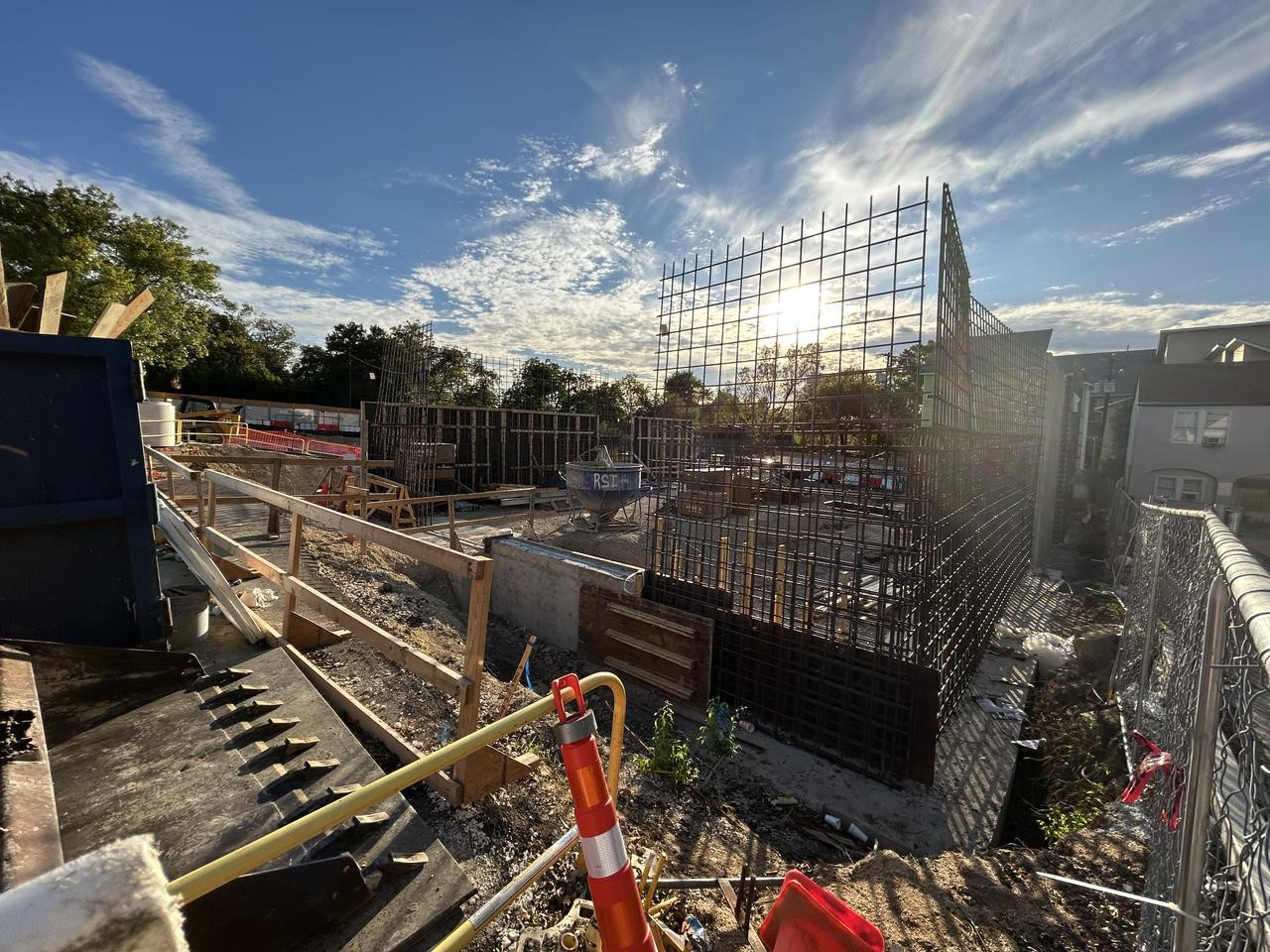
A seven-story West Campus apartment project called Bells Beach may be getting ready to start. The site plan was approved in 2025, but a tower crane license agreement was filed today. The project has 158 units and two underground parking levels. The site at 1008 W. 25 1/2 St. currently has a three-story apartment building.


Austin City Council was scheduled to vote on updates to UNO in summer 2025, but the vote was delayed after the University and UT Student Government expressed concerns. The item has not reached the City Council since. Qadri, who ran on a platform of affordability for students, said that he hopes to work with the University to update UNO, but he will move forward with an update regardless of its approval. He said he will “move on this in probably (the) first quarter of 2027.”
“We need to have an UNO update,” Qadri said. “It’s something that our office deeply believes in. Unfortunately, the University doesn’t quite believe it in the same regard. But now that we’re coming back for a second term, that is priority for me — to get an UNO update passed.”
A University spokesperson said they are not aware of any updates to the University’s position on UNO or working with the Austin City Council on an update.
UNO, first adopted in 2004, was initially created to “promote high-density, pedestrian-oriented redevelopment” in the area, and has been amended twice since then to allow buildings to rent by the bedroom and increase height allowances. The newest update, introduced in April 2024, would add additional tenant protections, encourage developers to include ground-floor commercial spaces instead of parking and increase building height limits.
In a May 2025 memo, an assistant city manager wrote the City Council vote was postponed to “allow for staff to formally meet with the leadership of the University of Texas at Austin (UT) to understand the university’s challenges, concerns, and context that frames their issues.”
Hudson Thomas, former SG president, and Thierry Chu, former SG vice president, sent a letter to the Austin City Council in June 2025 asking the city to postpone the vote, citing safety and displacement concerns. This year’s SG executive alliance has publicly stated that they support proposed updates to UNO.
UNO updates would also include expanding UNO’s boundaries north and west. Woods said the most important part of updating the plan is bringing tenant protections to students living outside the area it currently covers.
“It’s really disappointing that we’ve paused this process, and students are still being taken advantage of by landlords and struggling with affordability,” Woods said. “It’s urgent, and we hopefully can get updates moving again this year. That is my greatest hope.”

If the 9 Hundred, Atlantic Avenue, Arconia and Villas on 23rd all get going soon, how many more available lots are there for the 500 ft zoning of the expanded UNO? Kind of feels like they'll have to make up for those properties going live by expanding it outwards...which I am definitely not complaining on haha.