• City-versus-city activity is flat-out banned from being posted here in all its forms.

    City vs city trolling sets up a rather nasty and personal fight between forumers from one place and forumers from another place, potentially affecting hundreds of members any time it breaks out. Nothing good comes of versus-trolling, but long after the insults and mockery have been removed, bad feelings between individuals and between groups tend to linger, oftentimes popping up in unrelated threads for months afterwards.

    Thus, when it comes to 'versus' trolling, a line must be drawn--sharply. Anyone who crosses that line shall be disciplined, up to and including suspension and even summary banishment without warning. Forum moderation and administration shall be the arbiter of what constitutes versus-trolling, so if you think your post might be perceived as an unfair attack on an entire city that will upset residents there, tread lightly or reconsider how you intend to express your opinion. No forumer shall successfully claim ignorance of our policy against versus trolling, and no forumer should believe he can get away with it.

    The ban on versus activity applies to all posts and all threads, even ones that are not initially set up as city-versus-city.

    If you see any troublesome posts please report them using the "report a post" icon -
    report.gif
    in the upper right corner of every post on the forum.

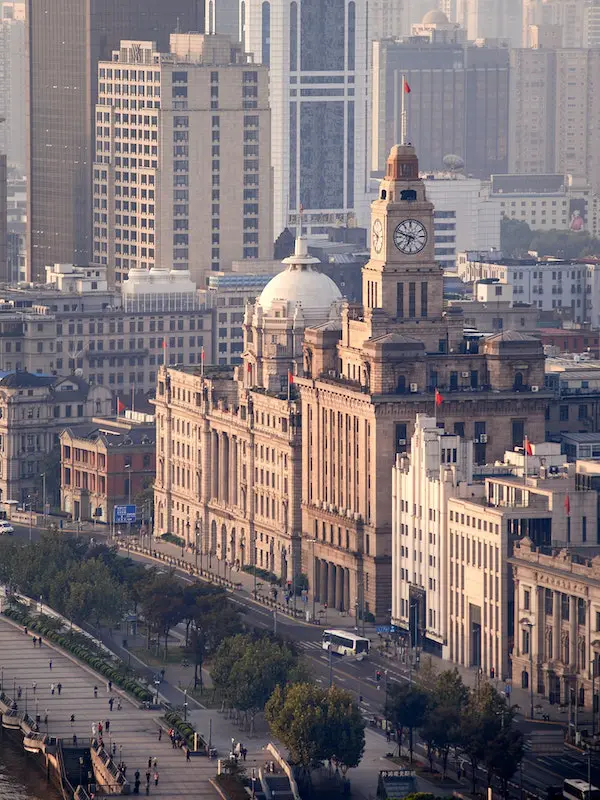
Places in cities that look like a different country

There is an entire neighborhood in SHanghai that looks almost nothing like Shanghai...

the-bund-article-003.jpg.webp
 
I feel like you could make that argument for anything someone posts in this thread. Taking the extreme in the other direction, if a Queens resident is so ignorant as to not know what China is, they wouldn't make the connection that the pics from the first post in this thread resemble that country. To that person it's just what Queens looks like and nowhere else looks like that.

Yes. That first line is the point. That people are singling out one thing to apply the argument to and not the others.

It seems like the argument is that these places aren't exact replicas of the place compared to. Nowhere is going to look exactly like anywhere else. Even if Canary Wharf were an exact replica of the Toronto CBD, they still drive on left side of the road in London, there would be double decker buses around, and more cheeky Nando's than Tim's occupying retail spaces. To that end, someone should have just responded to the question posed in this thread with "no" and everyone would move on.

Does Canary Wharf or that specific part of Tokyo look like other places besides the ones referenced? Sure. But is that important? Do they NOT look like those places? I can see Toronto in Canary Wharf. I could be convinced of Montreal as well, but that doesn't make it untrue that there's resemblance to Toronto.

It isn't so much about whether or not it's a replica because when you say something should be included in a category, whether it be Canada-style modern CBDs or otherwise, unless members of the group are all the same as one another, it's impossible to make a replica. You could make a replica one member of the group or of individual buildings, but that's not the group or category. I think the real issue there is that if you make a comparison very specific based on nuanced details it will be more accurate but many people will lack enough prerequisite knowledge for it to be intuitive or clearly apparent. But then, if you make it too broad and general, you lose accuracy but people more easily "get it".

For instance, I've long heard people refer to the process of a city building a lot of skyscrapers in a limited, usually central, location as Manhattanization. And they even call Frankfurt "Mainhattan" as a nickname because it has a lot of tall buildings compared to the norm for Europe and is on the river "Main". And Rotterdam is nicknamed "Manhattan at the Meuse" for simiar reasons. That is a very broad, general comparison because there are countless cities with skyscrapers in their center so that isn't a specifically NYC thing. But Manhattan is the most famous place for skyscrapers so people get it. But since the term doesn't consider the style of architecture and planning or require a specific number or size of buildings you can often make more accurate comparisons to HK, Dubai, Chicago, Toronto, or any number of skyscraper cities based on the finer details.

Meanwhile, I'm a tea enthusiast and am aware of often subtle differences between the teas of different regions. I once had a green tea from China that I remarked to a friend seemed very Japanese to me. To the point that if I didn't know what it was, I would have thought it was actually Japanese. My friend had no idea what I was talking about because they could tell it was a high quality, lively tasting green but had no clue what aspects made a tea seem Chinese or Japanese or that there even was any discernible difference. And that would also be the case for 99% of the rest of the population. Yet the similarity to Japanese greens was there regardless of anyone else's ignorance to it.
 
Canary Wharf isn't distinctly Canadian, but it's not not Canadian-looking either. Especially more recently as more residential towers have sprouted up. This could easily be somewhere in Toronto or Montreal or Vancouver or Calgary: (or Australia)

london-uk-january-7-2026-canary-wharf-district-skyline-with-gleaming-modern-skyscrapers-reflecting-cloudy-sky-3DFN5PJ.jpg

https://www.alamy.com/london-uk-jan...ers-reflecting-cloudy-sky-image715310474.html


It obviously stands out within London as an area that isn't built in a traditionally (or even distinctly modern) British style. Though it's more of generical global post-modern style than one that is derived from any sort of foreign vernacular, the fact that it was initially built by a Canadian developer ultimately makes it pretty fair to say that it's a "Canadian" import. You could say the same thing had it been an American or Australian or Japanese developer.


Another one is that the central office areas of both Toronto and Montreal were, effectively, slow moving urban renewal projects that obliterated anything old (with a few exceptions if the pre-war building was very large) between the late 1950s and early 1990s and replaced fine-grained commercial districts with block-spanning office tower complexes. In some cases, they erased entire side streets. This one used to go all the way through until it was blocked by the construction of Commerce Court North in the late 1960s/early 70s. Obviously there are plenty of mammoth office towers that busted entire blocks in the Loop, too (Sears Tower, of course), but they're islands surrounded by a mix of pre-war buildings and towers that don't take up the whole block. In Toronto and Montreal's case it was easier to build an integrated system when you were essentially planning a district from scratch.

Toronto's CBD has the 60s-70s urban renewal stuff with the windswept corporate plazas and all, but it exists in very close proximity to the finer-grained pre-war blocks - it's all sort of jumbled together, and you can turn the corner from one typology to the other at any point. Montreal and Vancouver are a bit different in that the older office cores were better maintained, with a more distinct modern core built up next to it (Los Angeles is like this too).


Obviously Canada is not the only country where office towers have underground malls and transit connections; it also did not invent this form of development.

Look, if Americans want to claim this phenomenon as theirs, you can have it. To be honest, most Torontonians cringe when a foreigner associates our city with the PATH network (the “underground city”), and I think most Montrealers would feel the same way. The PATH has a reputation for corporate dullness and mundane, mid-market retail. I also think foreigners immediately associate underground cities with Canada because of our cold, winter climate, often blowing the winter temperatures way out of proportion (“the underground city allows Torontonians to escape frigid temperatures as low as -40 for over half the year”). It has a never ending liminal space quality to it that would probably be of interest to some people, but that’s a very niche subculture.

The PATH is interesting as a sort of random curiosity of urban engineering, but yeah, unless you work in one of the financial district towers and want to avoid a bit of cold or rain or humidity on your walk to the subway there's really zero reason why anyone else would end up there.

The only time I've even been down there in the past decade+ is when I needed to pop into a drug store while in the area, and the closest one happened to be a Shoppers in the PATH. Of course, it ended up taking longer to actually find it in the subterranean labyrinth than it would have to have just walked over to the next-closest street-level store.


Back
Top